Category: Museum

  • For the Record

    For the Record

    In 2015, the Historical Society of Washington, D.C. launched a groundbreaking program called “For the Record: Artfully Historic D.C.” This innovative initiative aimed to capture and preserve scenes of the District’s built environment through various art forms.

    Partnering with the DC Preservation League, the National Building Museum, and the Capitol Hill Art League, the Historical Society organized a juried competition of paintings and photography to showcase the changing urban landscape of Washington, D.C. The collaboration with the DC Preservation League led to the creation of a list of the Most Endangered Places in Washington, D.C. These buildings, at risk of being lost or destroyed, inspired local artists who submitted their artworks to the exhibit.

    For the Record: Artfully Historic DC

    April 22, 2015 – June 19, 2015

    In 2015, the Historical Society of Washington, D.C. (HSW) launched “For the Record: Artfully Historic D.C.,” a new program to capture and preserve scenes of the District’s built environment. Along with the DC Preservation League, the National Building Museum, and the Capitol Hill Art League as co-sponsors, the Historical Society produced a juried competition of paintings and photography. Over 100 artists participated, submitting paintings and photographs depicting the city’s dynamic architecture. The top 75 artworks were selected by a panel of nine jurors and displayed at the Historical Society’s headquarters in the Carnegie Library at Mt. Vernon Square. The top five winning entries were added to the Historical Society’s permanent collection, while the remaining works were auctioned to support the organization’s preservation efforts. The success of the inaugural exhibit paved the way for future editions of “For the Record,” each focusing on different aspects of Washington, D.C.’s development.

    In subsequent years, the program continued to thrive with exhibits such as “For the Record: Changing DC” and “For the Record: Picturing DC,” which showcased the work of local artists and captured the essence of the city’s neighborhoods in various wards. The Historical Society’s dedication to documenting and celebrating Washington, D.C.’s rich history and architecture through art has not only engaged the community but also raised funds to support the preservation of the city’s heritage for generations to come.

    Presented at the George Washington University Museum|The Textile Museum in Foggy Bottom, these exhibits offer a visual journey through Washington, D.C.’s evolving landscape, providing a unique and artistic perspective on the city’s development. “Artistic Reflections of the District” continues to be a testament to the Historical Society’s commitment to preserving and celebrating the vibrant history of Washington, D.C.

    In response to the organization’s need to re-engage with the local community while advancing the documentation of current development projects in the city, “For the Record” was created. The program resulted in three consecutive annual exhibits, providing new audiences and fundraising while partnering with other local groups.

    For the Record: Changing DC

    April 15, 2016 – July 16, 2016

    The Historical Society aims to continue the tradition of capturing Washington’s built environment through the arts. For the Record is an annual juried exhibit of artwork capturing Washington’s changing urban landscape. The Historical Society of Washington, D.C., challenges local artists to create 2D artwork depicting Washington’s changing built environment. For the Record provides exposure, recognition, and enduring prestige to local artists and raises funds to support the Historical Society.


    For the Record: Picturing DC

    November 9, 2017 – March 4, 2018

    For the Record: Picturing D.C. is a juried exhibit of 44 original artworks by 25 local artists focused on neighborhoods in each of Washington, D.C.’s eight wards. These two-dimensional artworks, created between 1988 and 2017, offer the artists’ interpretations of Howard Town/Pleasant Plains, Burleith, Palisades, Shepherd Park, Ivy City, Buzzard Point, Kenilworth, or Congress Heights.

    Since its founding in 1894, the Historical Society of Washington, D.C., has collected and preserved paintings, illustrations, and photographs depicting the city’s built environment. By encouraging continued artistic documentation of the modern city, For the Record continues this tradition for future generations. The exhibit is presented at the George Washington University Museum|The Textile Museum in Foggy Bottom.

  • Museum Branding and New Technologies

    Museum Branding and New Technologies

    In 2013, the Bailey-Matthews National Shell Museum launched new branding and implemented new digital solutions for membership, marketing, and visitor engagement. The museum implemented the use of new technologies, including social media and group marketing strategies to successfully exceed attendance goals. The results of these new initiatives resulted in increased community participation and better engagement from visitors during their visit to the museum.

    The museum became a partner in the Southeastern Reciprocal Museums (SERM) and the North American Reciprocal Museums (NARM). These two programs enhanced marketing and visibility while adding great value to Museum membership.

    shell museum

    The Raymond Burr Memorial Exhibit and Henry Domke both enhance the historical and artistic aspects of the museum. John managed and led staff and the board of trustees during several special events. He promoted interest in the museum within its local, national, and international communities.

    Mr. Suau implemented mobile museum technology to help sustain visitor engagement using QR codes, audio tours, and mobile web-based games.

    Amanda Stirn

    As the Senior Assistant Director of the Shell Museum, I was so excited to have John join our team. John was the key person for all the marketing, advertising and public relations for the Bailey Matthews Shell Museum…His experience in Museum art and impact on the observer is amazing. I would recommend him highly to any museum in the process of a realignment with their strategic goals or looking to expand beyond the norm. You will appreciate John’s attention to detail and his wonderful work in bringing together vision and reality. John is a true asset to any team: personable, upbeat, and very artist with a keen eye for all the details.

    Amanda Stirn, Business Consultant at Florida SBDC at Florida Gulf Coast University

  • Building Museums

    Building Museums

    During his tenure as director of the Mid-Atlantic Association of Museums, John Suau led the creation of the three-day symposium “Building Museums,” considered one of the industry’s most important professional education programs even today. After the success of the first three-hour workshop in 2003 in Albany, New York, John worked with the presenters to develop an in-depth symposium about creating new museum spaces.

    Based on demand, the program was designed to engage constituents involved with capital museum projects, including architects, designers, directors, trustees, funders, and other types of museum service providers. The community quickly embraced the program and continues to develop the content to fit the needs of attendees. The symposium presents content based on three phases: vision, implementation, and sustainability. The content of each day reflected a broad range of museum sizes and scales, budgets, scopes of building projects, disciplines, and collecting versus non-collecting institutions.

    It is one of the most attended international programs about building museums. The program continues to thrive today, some 15 years after its first presentation in 2004. The annual symposium was hosted in major cities at local museums until 2021, when COVID-19 forced most conferences, like Building Museums 2021, to be hosted virtually.

    John worked with me while I was a board member of the Mid-Atlantic Association of Museums beginning in 2003. His can do attitude was a great catalyst to creating a new symposium on Building Museums in 2005. That program was launched to meet a specialized need in the field. John’s work on Building Museums laid the groundwork for a successful conference which has continued to serve museum professionals and service providers for over 10 years. 

    Martha Morris, Associate Professor Emerita, George Washington University, Museum Studies, Washington, D.C.

  • Mid-Atlantic Association of Museums

    Mid-Atlantic Association of Museums

    MAAM Logo, 2002

    In April 2002, John Suau become the executive director of the Mid-Atlantic Association of Museums (MAAM). One of six regional museum associations in the US, MAAM is one of the oldest and represents the most densely populated museum community in the world, arguably. The regional association includes museums in Delaware, Maryland, New Jersey, New York, Pennsylvania, and Washington, D.C.

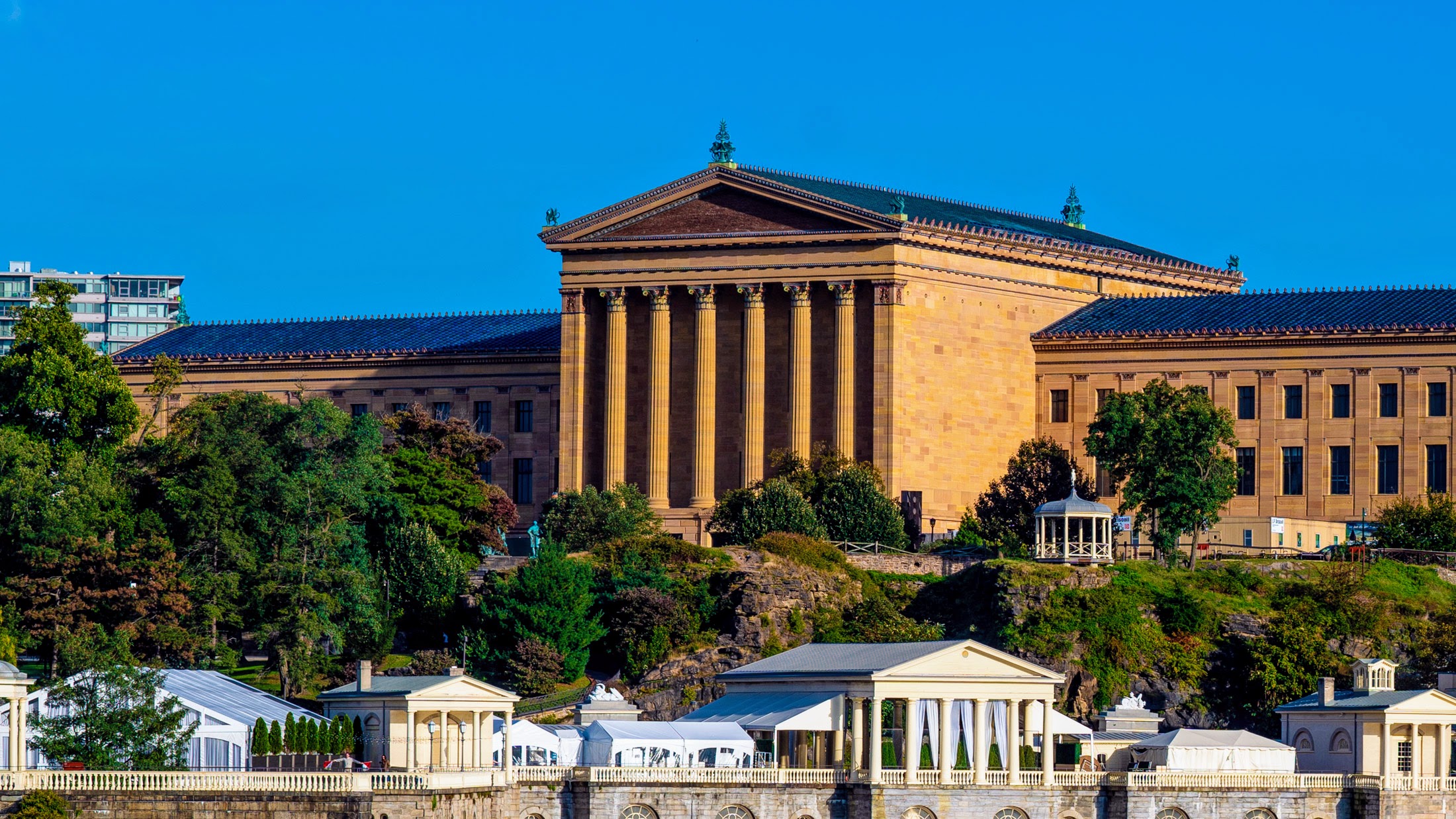
    Philadelphia Museum of Art, Philadelphia, PA

    When John Suau took the helm of the organization, it was just over 50 years old and experiencing a mid-life crisis. With the region’s museum population, the region holds the most collections, employs the most museum professionals, and educates the most university students in the country.


    Each year, the Mid-Atlantic Association of Museums presented a conference in one of the region’s cities, including Albany, Newark, Philadelphia, and Baltimore. These three-day programs included professional development sessions for museum professionals from all types and sizes of institutions.

    As one of six regional museum associations, MAAM is the country’s oldest.


    John immediately began to update the organization’s website and was a pioneer user of mass email newsletters to help reinvigorate the organization and raise the group’s profile in the museum community. His work included redesigning the association’s logo, which is still used today.

    Early in his tenure, John was inspired to create Building Museums, a three-day symposium about the expansion of existing and the creation of new museum facilities. Based on the community interest in a short workshop, John worked with the presenters to create a program that raised the profile of MAAM on both a national and an international level. That program is still in existence, some 15 years after the workshop in Albany.

    Building Museums brochure, 2006

    During his tenure, John watched the Mid-Atlantic Association of Museums membership grow exponentially with over 2,000 members at his departure. John’s work served as a template for other museum association’s educational programs nationally and internationally.

    The Building Museums program has produced two books by the content experts since the inception of this conference.

    Walt Crimm

    John led MAAM with enormous creative energy and enthusiasm, expanding it’s offerings to membership and launching a major new set of conference initiatives that took the regional association into national a platform for information. His integrity and follow through delivered everything he promised time after time.

    Walt Crimm, Principal, Walt Crimm Associates
  • Diversity at AAM

    Diversity at AAM

    I served as the first diversity officer for the AAM. I was charged with advancing diversity and equity in museum practice at the American Alliance of Museums. I initiated the first Diversity Committee in this role by bringing their voices together.

    I began my work with the AAM Accreditation and the Museum Assessment Program (MAP) programs. I was later contracted to coordinate the first hemispheric conference of the Americas. This was in partnership with the International Conference of Museums (ICOM).

    The five-day conference, “Museums and Sustainable Communities,” included delegates from Canada, the USA, Mexico, and Central and South America. The meeting was hosted in San José, Costa Rica, on April 15-18, 1998. This hemispheric conference was the first of its kind. It laid the groundwork for what is now a biannual conference of ICOM.

    After this successful conference, I continued my work at AAM as the manager for professional education and diversity. In this role, I created the first national coalition of diverse museum professionals. This coalition served as the foundation for the AAM Diversity Committee today.

    I began this important work with the help of many museum leaders. I brought together leaders from eight professional associations. These include the African American Association of Museums. They also include the AAM Asian Pacific American Professional Interest Committee. The other committees are the AAM Latino American Professional Interest Committee and the AAM Native American Professional Interest Committee. Additionally, the AAM Gay and Lesbian Professional Interest Committee participated. The AAM AIDS Network, the AAM Committee for ADA Concerns, and the Council of American Jewish Museums were also involved.

    These groups joined together to form what is now known as the AAM Diversity Committee. Together they worked to create programming and cross-cultural events. They also developed funding initiatives and a strategic agenda. The AAM Board of Directors participated in these efforts.

    Significant accomplishments from that work include:

    • The 2000-2001 annual meetings presented over sixty-five sessions focusing on multicultural issues in museums. Coalition members developed most of these professional education panels.
    • The coalition also raised more than $10,000 for scholarships. This funding facilitates the participation of ethnic minorities and other under-represented groups in annual meetings. It also supports their involvement in professional education programs of AAM.
    • As a result, the association awarded 35 scholarships to museum professionals. These professionals came from diverse backgrounds and interests. They attended the annual meetings and professional education seminars from 2000-2001.
    • At the November 2000 AAM board meeting in Washington, D.C., participants from the AAM Board of Directors met with representatives from the AAM Diversity Coalition. They engaged in a two-day strategic planning meeting.

    A copy of the report is available. The final AAM Strategic Agenda for Action provides a benchmark. This illustrates what the leaders in the museum field proposed in March of 2001.

    “Museums exist to celebrate the richness of the diverse communities that we serve…”

    Donald Duckworth, Director, The Bishop Museum, Hawai’i
    Odette Diaz Schuler, Deputy Executive Director at Center for the Advancement and Study of International Education
    Odette Diaz Schuler

    John and I have had the opportunity to work together on various projects through the American Alliance of Museums (AAM). Chiefly, the first-ever Summit of Museums of the Americas and the formation of the AAM’s Diversity Coalition…I can recommend him without reservation for any project having to do with cultural properties, as he is such a well-rounded and skilled individual.

    During my tenure, I collaborated on creating “Leadership through Diversity.” It is a national program developed by the AAM. The program was developed in partnership with the Smithsonian Institution Center for Education and Museum Studies. The workshop was presented at six regional museum association conferences and reached over 250 diverse museum professionals.

    Tania Said

    John and I worked together developing and presenting diversity training workshops for museums professionals around the country. He helped make the workshops fun, engaging, informative, and practical. Feedback from participants was excellent…John’s energy and thinking were invaluable.

    Tania Said, Visitor Advocate / Director of Education, David Owsley Museum of Art, Ball State University
  • Museums and Sustainable Communities

    Museums and Sustainable Communities

    Museums and Sustainable Communities Final Report, 1998

    In 1998, I was contracted by the American Alliance of Museums to coordinate the first hemispheric conference of museums. The conference, “Museums and Sustainable Communities” brought museum leaders from Canada to Chile together in San José, Costa Rica, in April of 1998 for a three-day summit.

    The meeting resulted in a report that summarizes the discussions on the role of the museum within the community as it relates to education, cultural heritage, technology, emergency preparedness, and cultural tourism.

    The conference report examines culture’s role in the development process through case studies and statements from major international agencies.

    The conference was conducted as part of the ICOM Triennial Program 1995-1998 and was organized in cooperation with the Institute for Latin American Museology (ILAM).

    Jerold Kappel

    John served as my project director for the groundbreaking Summit of the Museums of the Americas in Costa Rica. It was an intense 5 day event with multiple moving pieces and John put in an extraordinary effort. I returned to DC the day after the event and John stayed in Costa Rica to work with our in-country organizing partner. Museum and cultural colleagues still speak about that highly interactive summit and what it accomplished. John was a critical piece of that success.

    Jerold Kappel, CFRE, Consultant

  • Santa Lucía ~ Patron Saint of Vision

    Santa Lucía ~ Patron Saint of Vision

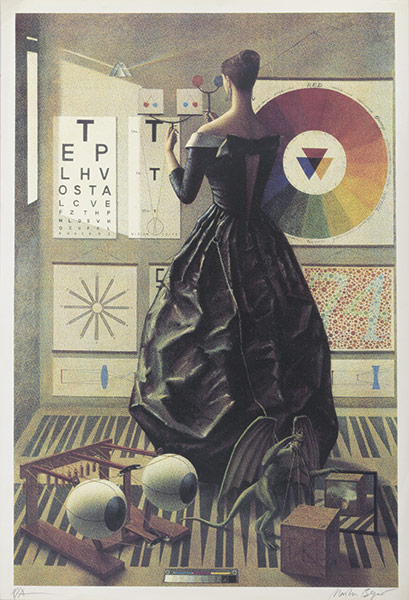
    In his painting Santa Lucía – La Vista, Spanish artist Sigfrido Martín Begué pays tribute to the patron saint of vision.

    Santa Lucía – La Vista, Sigfrido Martín Begué (1990)

    santa lucía vista saint lucia vision
    Santa Lucía – La Vista

    Sigfrido’s Santa Lucía – La Vista is a vibrant painting about vision. The large eyes in the foreground are a big clue that this is Santa Lucía. With her back facing the viewer, we cannot see her eyes at all. Like the other Santas, she is wearing a Balenciaga-inspired dress. She is taking a vision test. On the wall, the artist created a gallery of paintings, including all kinds of visual tests and examinations. Finally, one sees a small demon in the foreground with visual trickery often used by painters.

    About Santa Lucía

    Santa Lucía (283-304) originated in Syracuse, Italy. She was the daughter of a Roman nobleman who died when she was only five years old. Santa Lucía pledged her virginity to God and gave her riches to the poor. Unfortunately, her widowed mother had already promised her to a wealthy pagan. When her betrothed learned of the disbursement of her dowry, he denounced her to the governor. As legend has it, they attempted to defile and burn her at the stake, but she survived. She died after gouging out her eyes. Miraculously, claims that her eyes were intact when unearthed in the 16th century still prevail.

    [maxbutton name=”STA LUCIA”]

    The Art of Martín Begué

    sigfrido martín begué almodóvar spanish painting
    Sigfrido Martín Begue, c. 1989 (Photo courtesy Mar Estrada)

    Sigfrido Martín Begué’s art is surreal and futuristic at the same time, drawing upon painterly techniques of Italy and Spain’s neoclassical painters. His work embraces modern and contemporary societal themes while deploying deeply-rooted Christian symbolism and metaphors. The artwork style recalls De Chirico and El Greco with a post-modern twist. Sigfrido’s figures are often elongated and stylized, and the color palette is bold in places and muted in others. His sense of humor and irony is evident in almost every major work.

    Sigfrigo’s portfolio included his pencil drawings to large-scale oil paintings executed with the precision of his Spanish predecessors. His paintings fit into large contemplative themes, from Los Automátas to Las Máquinas. All of the dresses depicted in the series were inspired by the fashion designs of Cristóbal Balenciaga, who opened his first clothing boutique in 1917 in San Sebastián, Spain.

    Artist Series Available for Collectors

    Santa Lucía – La Vista (1989) was one of a series of five paintings about the senses in the exhibit Máquinas. Produced by Galería Mar Estrada, the exhibition was a solo show of Sigfrido Martín Begué’s most grandiose paintings. Máquinas was a tour-de-force display of the artist’s prolific technique. His images demonstrate fluency in history and in-depth knowledge of saints. Evident is a passion for fashion and a fascination with technology. He loved architecture, composition, and design, which are second only to his command of artistic symbolism.

    To celebrate the 30th anniversary of the exhibit Máquinas, a few signed and numbered silk-screens of Santa Lucía – La Vista are available for purchase.

    [auction-nudge tool=”listings”]

  • Santa Cecilia ~ Patron Saint of Music

    Santa Cecilia ~ Patron Saint of Music

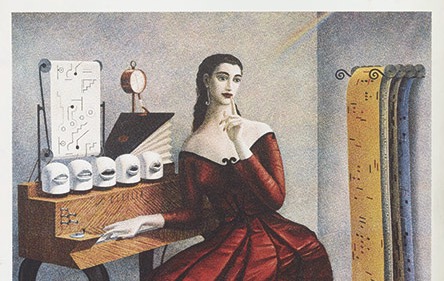
    In his painting Santa Cecilia – El Oído, Spanish artist Sigfrido Martín Begué pays tribute to the patron saint of music.

    santa cecilia patron saint of music Santa Cecilia – El Oído, Sigfrido Martín Begué (Image courtesy Mar Estrada)

    We know this is Santa Cecilia as the artist has her seated at the organ, an artistically accurate way of portraying her. Everything about this work tells us we are contemplating sound. The dog is an apparent reference to the 1898 image of “Nipper” from the Victrola gramophone ads. Notice the ear canals inside the gramophone and the five mouths articulating the vowels. Sigfrido’s use of imagery is rich in detail.

    Santa Cecilia is considering all the sounds in the room. Is she focused on the same sound the dog hears? Or is it the sound from the singing mouths when she touches the keyboard? Like the saints in the other paintings from this series, she wears a Balenciaga inspired dress.

    About Santa Cecilia

    Santa Cecilia (died c. 176 AD) originated in Rome, Italy. She was the daughter of the Roman nobility. She pledged her virginity to God. Eventually, Cecilia wed a man named Valerian out of family obligation. Having “sung in her heart to God” before her wedding, Cecilia explained to her husband that her guardian angel would harm him for defiling her virginity. Her husband asked for proof. After his baptism, he too saw the angel. He became a martyr before Santa Cecilia met her demise. After an attempt to suffocate her in the baths, someone tried to behead her unsuccessfully. She survived the severe wounds to her neck for three days. As legend has it, her body was later uncovered entirely intact. She is the patron saint of music.

    [maxbutton id=”1″ ]

    The Art of Sigfrido Martín Begué

    sigfrido martín begué almodóvar spanish painting Sigfrido Martín Begue, c. 1989 (Photo courtesy Mar Estrada)

    Sigfrido Martín Begué’s art is surreal and futuristic at the same time, drawing upon painterly techniques of Italy and Spain’s neoclassical painters. Sigfrido Martín Begué’s art is surreal and futuristic at the same time, drawing upon painterly techniques of Italy and Spain’s neoclassical painters. His work embraces modern and contemporary societal themes while deploying deeply-rooted Christian symbolism and metaphors. The artwork style recalls De Chirico and El Greco with a post-modern twist. Sigfrido’s figures are often elongated and stylized, and the color palette is bold in places and muted in others. His sense of humor and irony is evident in almost every major work.

    Sigfrigo’s portfolio included his pencil drawings to large-scale oil paintings executed with the precision of his Spanish predecessors. His paintings fit into big contemplative themes, from Los Automátas to Las Máquinas. All of the dresses depicted in the series were inspired by the fashion designs of Cristóbal Balenciaga, who opened his first clothing boutique in 1917 in San Sebastián, Spain.

    Artist Series Available for Collectors

    Santa Cecilia – Begué’s (1989) was one of a series of five paintings about the senses in the exhibit Máquinas. Produced by Galería Mar Estrada, the exhibition was a solo show of Sigfrido Martín Begué’s most grandiose paintings. Máquinas was a tour-de-force display of the artist’s prolific technique. His images demonstrate fluency in history and in-depth knowledge of saints. Evident is a passion for fashion and a fascination with technology. He loved architecture, composition, and design, which are second only to his command of artistic symbolism.

    To celebrate the 30th anniversary of the exhibit Máquinas, a few signed and numbered silk-screens of Santa Cecilia – El Oído are available for purchase.

    [auction-nudge tool=”listings”]

  • The Art of Sigfrido Martín Begué

    The art of Sigfrido Martín Begué is surreal and futuristic at the same time, drawing on the painterly techniques of Italy and Spain’s neoclassical masters. His work embraces modern and contemporary themes while deploying deeply rooted Christian symbolism and metaphor.

    The style recalls De Chirico and El Greco with a postmodern twist. Sigfrido’s figures are often elongated and stylized, and his palette is bold in places and muted in others. His sense of humor and irony is evident in almost every major work. His portfolio ranges from pencil drawings to large-scale oil paintings executed with the precision of his Spanish predecessors, and his paintings fit into large contemplative themes, from Los Autómatas to Las Máquinas.

    In his Santas series, each saint represents one of the five senses, and every dress is inspired by the designs of Cristóbal Balenciaga, who opened his first boutique in San Sebastián, Spain, in 1917.


    Santa Lucía – La Vista by Sigfrido Martín Begué: a saint in a Balenciaga-inspired dress, seen from behind, taking an eye test

    Santa Lucía – La Vista

    Sigfrido Martín Begué, 1990
    Image courtesy Mar Estrada; photo by Juan Luque

    Sigfrido’s Santa Lucía – La Vista is a vibrant painting about vision. The large eyes in the foreground are the clue that this is Santa Lucía. With her back to the viewer, we cannot see her eyes at all. Like the other Santas, she wears a Balenciaga-inspired dress. She is taking a vision test, and on the wall the artist has created a gallery of eye charts and visual examinations. In the foreground, a small demon plays with the kind of visual trickery painters have long used.

    About Santa Lucía

    Santa Lucía (283–304) was born in Syracuse, Sicily, the daughter of a Roman nobleman who died when she was five. She pledged her virginity to God and gave her riches to the poor, though her widowed mother had already promised her to a wealthy pagan. When he learned that her dowry had been given away, he denounced her to the governor. According to legend, attempts to defile her and burn her at the stake failed, and her eyes were put out before her death. She is the patron saint of the blind and of eyesight.


    Santa Cecilia – El Oído by Sigfrido Martín Begué: a saint seated at an organ beside a dog and a gramophone

    Santa Cecilia – El Oído

    Sigfrido Martín Begué, 1989
    Image courtesy Mar Estrada; photo by Juan Luque

    Sigfrido’s Santa Cecilia – El Oído is a beautifully composed image about sound. We know this is Santa Cecilia because the artist has seated her at the organ, one of the traditional ways she has been portrayed. Everything in the work asks us to contemplate sound, from the dog, a nod to “Nipper” of the 1898 gramophone advertisements, to the inner workings of the machine. Notice the ear canals inside the gramophone and the five mouths on top of the organ, each forming a vowel. Is Santa Cecilia listening to every sound in the room? Does she hear what the dog hears, or the voices singing as she touches the keys? Like the other saints, she wears a Balenciaga dress.

    About Santa Cecilia

    Santa Cecilia was a Roman noblewoman who pledged her virginity to God but was married to a man named Valerian. Having “sung in her heart to God” during the wedding, she told him a guardian angel protected her. Valerian asked for proof; after his baptism he saw the angel, and he was later martyred before her. According to legend, she survived an attempt to suffocate her in the baths and lived for three days after a failed beheading, and her body was later found intact. She is the patron saint of music.


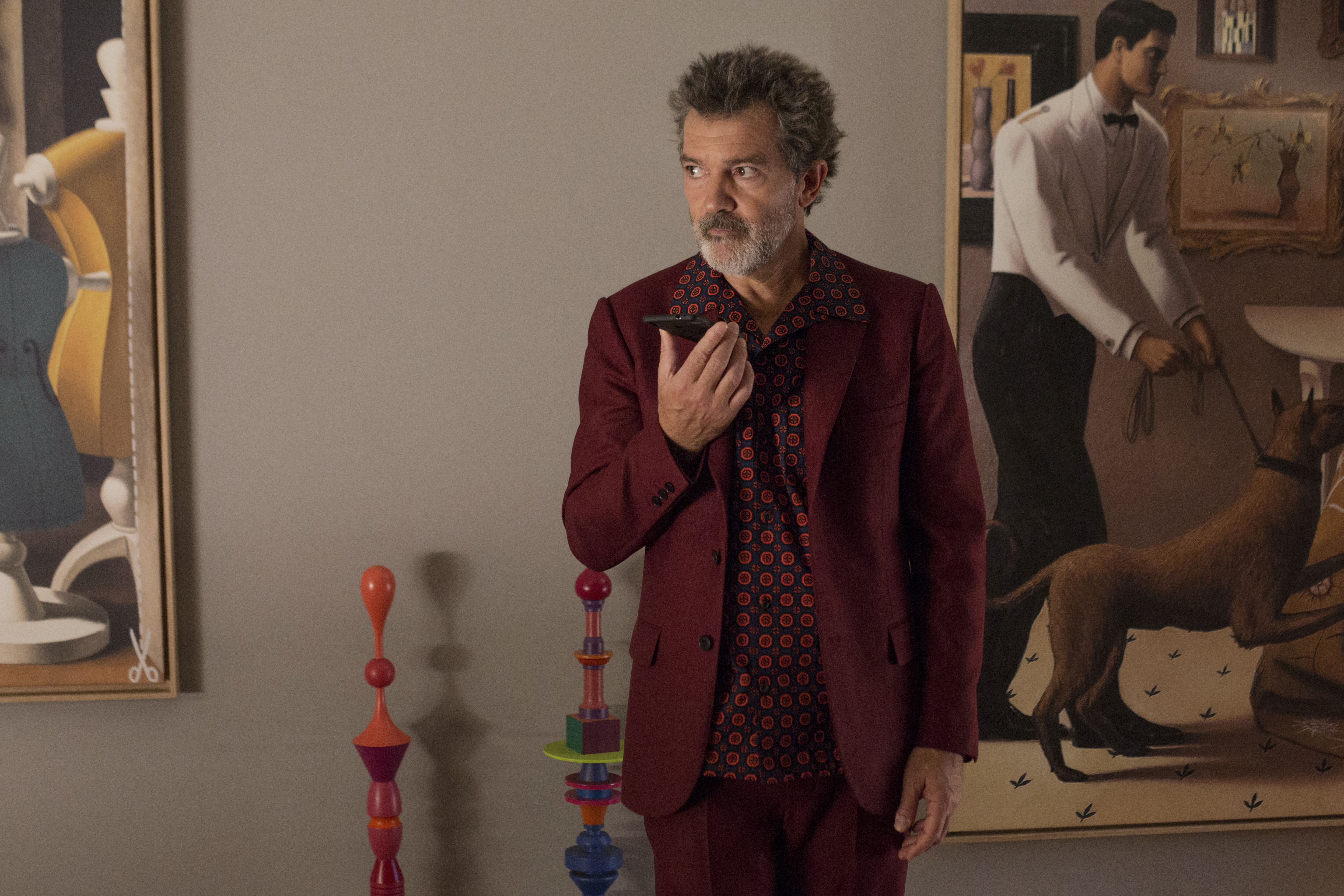
    As seen in Pain and Glory

    Sigfrido Martín Begué (Madrid, 1959–2010) created two of the most prominent paintings in Pedro Almodóvar’s Pain and Glory: Las Costureras (1996) and Santa Casilda – El Olfato (1986).

    Antonio Banderas as Salvador Mallo in Pain and Glory, standing between two paintings by Sigfrido Martín Begué
    Salvador Mallo (Antonio Banderas) between two paintings by Sigfrido Martín Begué in Pain and Glory: Las Costureras (left) and Santa Casilda – El Olfato (right). Image courtesy El Deseo D.A. S.L.U., photo by Manolo Pavón.

    Read more about Sigfrido’s work in Pain and Glory · Explore his work at Universo Sigfrido

  • The ‘Tesoros del Arte Español’ Exhibit at Expo ’92

    The ‘Tesoros del Arte Español’ Exhibit at Expo ’92

    The ‘Tesoros del Arte Español’ exhibit, showcased at Expo ’92 in Seville, Spain, mesmerized visitors with a captivating display of Spain’s rich artistic heritage. This article delves into the exhibit’s significance, cultural highlights, and enduring legacy in the world of art and culture.

    Highlights of the ‘Tesoros del Arte Español’ Exhibit

    Exhibit Catalog

    The ‘Tesoros del Arte Español’ exhibit featured a diverse collection of masterpieces by famous Spanish artists such as Goya, Velázquez, El Greco, and Picasso. From sublime paintings to exquisite sculptures, the exhibit offered a comprehensive showcase of Spain’s artistic brilliance through the ages. Visitors to the exhibit were treated to a visual feast of Spain’s cultural heritage, including architectural elements, textiles, ceramics, and more. The exhibit highlighted the rich tapestry of Spain’s artistic traditions and showcased the country’s unique cultural identity through its artistry. The ‘Tesoros del Arte Español’ exhibit provided visitors with an educational and inspiring experience, offering insights into Spain’s artistic legacy and historical significance. Through interactive displays and guided tours, visitors deepened their understanding of Spanish art and history in a visually captivating setting.

    The legacy of the ‘Tesoros del Arte Español’ exhibit at Expo ’92 lives on in the hearts and minds of art enthusiasts worldwide. The exhibit celebrated Spain’s artistic heritage and inspired a renewed appreciation for Spanish art and culture, impacting the global cultural landscape.

    The ‘Tesoros del Arte Español’ exhibit at Expo ’92 in Seville, Spain, was a captivating journey through Spain’s artistic legacy, showcasing the country’s rich heritage to a global audience. Through its diverse collection of masterpieces and immersive experience, the exhibit continues to be celebrated for its cultural significance and contribution to the art world.

    John Suau was the technical curator for two exhibitions in the Spanish Pavilion at Seville’s World’s Fair, EXPO’92. “Treasures of Spanish Art” was a major exhibition about the history of Spanish art that was on display in the pavilion from April through October 1992. John worked on the exhibition loans, specifically those coming from significant institutions in the United States of America like the Metropolitan Museum of Art, the Museum of Modern Art in New York City, and the National Gallery of Art in Washington, D.C. John worked closely with the exhibit curators to ensure the safe and secure transportation of artwork for the exhibit. He worked with exhibition specialists on the installation of the artwork. John also worked with conservators from several countries to ensure the exhibition succeeded with minimal impact on the artwork.