Category: Program

  • DC History Center

    DC History Center

    digital marketing strategist
    John Suau

    Created over five years, the DC History Center, an urban history center in the US, opened on May 11, 2019. The center includes a library and a museum and is operated by the Historical Society of Washington, D.C. Founded in 1898, the society has long struggled to find the “right-size” home to support its mission in Washington.

    The Historical Society closed in 2011 due to a lack of funding and was without a director for three years. After a two-year search, the Historical Society hired John Suau. Under his leadership, a beautiful new destination for DC history was created. The American Architecture Awards recently named Apple’s transformative restoration of the Carnegie Library the best restoration of 2020. With the support of technology, its transition into a 21st-century urban history center is finished.

    Digital Communications

    Rebranding the organization

    Creating a new digital footprint with a cost-efficient blog website enabled easier integration with other digital marketing tools.

    The organization was rebranded as @dchistory to strengthen the brand consistently across Twitter/X, Instagram, and Facebook.

    Exhibits

    Creating new exhibits enlivened community participation and engaged artists and photographers in the Historical Society’s work.

    For the Record is one example. This was a crowd-sourced exhibit program about documenting the built environment of contemporary Washington, D.C. A group of museum curators juried the exhibition. It rapidly grew into one of the local community’s most engaging exhibits. From 2017 through May 2019, the Historical Society vacated the Carnegie Library to restore it.

    During the restoration, community partners played a crucial role. The Newseum, the National Building Museum, and the George Washington University Museum provided program and operation space. This allowed for continued engagement with the local community.

    Public Programs

    Partnerships with community organizations are an important part of the new DC History Center. These partners enhance programs and bring new and diverse audiences to the new DC History Center. In 2014, the society partnered with the Smithsonian National Museum of African American History and Culture (NMAAHC). They hosted the final edition of “Saving Our African American Treasures.”

    The DC History Center produced numerous public programs, including tours, workshops, and speaker series. The annual DC History Conference partnered with the DC Public Library and the George Washington University Gelman Library. It worked with the National Archives. The University of the District of Columbia also collaborated. The Smithsonian National Museum of American History was included as well.

    Community Partnerships

    Community partnerships expanded the organization’s reach by establishing strategic alliances with local organizations. Partnerships include the Capital Pride Alliance and the DC Public Library. Other partners are the DC Preservation League, the George Washington University Museum, the National Archives, and the National Building Museum.

    Collaborative relationships were formed with museum colleagues at the Smithsonian Anacostia Museum. Additionally, we connected with colleagues at Smithsonian Associates. We also reached out to the Smithsonian Latino Center and the Smithsonian National Museum of African American History and Culture.

    The Historical Society developed a long-term strategic partnership with the DC Office of Planning. This partnership helped to develop HistoryQuest DC. It is an interactive map with historical data on approximately 127,000 buildings in Washington, DC.

    The map offers many layers of information for the user. The website provides historical data on individual buildings. It also links to information about properties on the National Register of Historic Places.

    Fundraising and Grants

    A complimentary program, the Visionary Historian Award, was established to create a second fundraising event recognizing local historians.


    Together, the award programs increase the organization’s visibility and elevate the brand across the city. The events raised 10-15% of the organization’s annual budget. Augmented support from DC government agencies like the DC Commission on the Arts and Humanities and HumanitiesDC bolstered public support. Project grants from the Office of Planning also contributed. Overall, public support increased by more than 2300%. 

    Corporate Partnerships

    Apple and the Carnegie Library Restoration

    DC History Center

    This new facility includes three exhibit galleries, a research library, a retail store, offices, and state-of-the-art collection storage facilities. From rebranding to a successful partnership with Apple, the DC History Center is now a 21st-century cultural hub. It welcomes all visitors for free, advancing the mission of the Historical Society.

    selma thomas
    Selma Thomas, Museum Consultant

    John brought both vision and good management to the Historical Society and with his professional background and contacts, turned an archaic institution into a vibrant player in the city’s cultural scene.

  • For the Record

    For the Record

    In 2015, the Historical Society of Washington, D.C. launched a groundbreaking program called “For the Record: Artfully Historic D.C.” This innovative initiative aimed to capture and preserve scenes of the District’s built environment through various art forms.

    Partnering with the DC Preservation League, the National Building Museum, and the Capitol Hill Art League, the Historical Society organized a juried competition of paintings and photography to showcase the changing urban landscape of Washington, D.C. The collaboration with the DC Preservation League led to the creation of a list of the Most Endangered Places in Washington, D.C. These buildings, at risk of being lost or destroyed, inspired local artists who submitted their artworks to the exhibit.

    For the Record: Artfully Historic DC

    April 22, 2015 – June 19, 2015

    In 2015, the Historical Society of Washington, D.C. (HSW) launched “For the Record: Artfully Historic D.C.,” a new program to capture and preserve scenes of the District’s built environment. Along with the DC Preservation League, the National Building Museum, and the Capitol Hill Art League as co-sponsors, the Historical Society produced a juried competition of paintings and photography. Over 100 artists participated, submitting paintings and photographs depicting the city’s dynamic architecture. The top 75 artworks were selected by a panel of nine jurors and displayed at the Historical Society’s headquarters in the Carnegie Library at Mt. Vernon Square. The top five winning entries were added to the Historical Society’s permanent collection, while the remaining works were auctioned to support the organization’s preservation efforts. The success of the inaugural exhibit paved the way for future editions of “For the Record,” each focusing on different aspects of Washington, D.C.’s development.

    In subsequent years, the program continued to thrive with exhibits such as “For the Record: Changing DC” and “For the Record: Picturing DC,” which showcased the work of local artists and captured the essence of the city’s neighborhoods in various wards. The Historical Society’s dedication to documenting and celebrating Washington, D.C.’s rich history and architecture through art has not only engaged the community but also raised funds to support the preservation of the city’s heritage for generations to come.

    Presented at the George Washington University Museum|The Textile Museum in Foggy Bottom, these exhibits offer a visual journey through Washington, D.C.’s evolving landscape, providing a unique and artistic perspective on the city’s development. “Artistic Reflections of the District” continues to be a testament to the Historical Society’s commitment to preserving and celebrating the vibrant history of Washington, D.C.

    In response to the organization’s need to re-engage with the local community while advancing the documentation of current development projects in the city, “For the Record” was created. The program resulted in three consecutive annual exhibits, providing new audiences and fundraising while partnering with other local groups.

    For the Record: Changing DC

    April 15, 2016 – July 16, 2016

    The Historical Society aims to continue the tradition of capturing Washington’s built environment through the arts. For the Record is an annual juried exhibit of artwork capturing Washington’s changing urban landscape. The Historical Society of Washington, D.C., challenges local artists to create 2D artwork depicting Washington’s changing built environment. For the Record provides exposure, recognition, and enduring prestige to local artists and raises funds to support the Historical Society.


    For the Record: Picturing DC

    November 9, 2017 – March 4, 2018

    For the Record: Picturing D.C. is a juried exhibit of 44 original artworks by 25 local artists focused on neighborhoods in each of Washington, D.C.’s eight wards. These two-dimensional artworks, created between 1988 and 2017, offer the artists’ interpretations of Howard Town/Pleasant Plains, Burleith, Palisades, Shepherd Park, Ivy City, Buzzard Point, Kenilworth, or Congress Heights.

    Since its founding in 1894, the Historical Society of Washington, D.C., has collected and preserved paintings, illustrations, and photographs depicting the city’s built environment. By encouraging continued artistic documentation of the modern city, For the Record continues this tradition for future generations. The exhibit is presented at the George Washington University Museum|The Textile Museum in Foggy Bottom.

  • Building Museums

    Building Museums

    During his tenure as director of the Mid-Atlantic Association of Museums, John Suau led the creation of the three-day symposium “Building Museums,” considered one of the industry’s most important professional education programs even today. After the success of the first three-hour workshop in 2003 in Albany, New York, John worked with the presenters to develop an in-depth symposium about creating new museum spaces.

    Based on demand, the program was designed to engage constituents involved with capital museum projects, including architects, designers, directors, trustees, funders, and other types of museum service providers. The community quickly embraced the program and continues to develop the content to fit the needs of attendees. The symposium presents content based on three phases: vision, implementation, and sustainability. The content of each day reflected a broad range of museum sizes and scales, budgets, scopes of building projects, disciplines, and collecting versus non-collecting institutions.

    It is one of the most attended international programs about building museums. The program continues to thrive today, some 15 years after its first presentation in 2004. The annual symposium was hosted in major cities at local museums until 2021, when COVID-19 forced most conferences, like Building Museums 2021, to be hosted virtually.

    John worked with me while I was a board member of the Mid-Atlantic Association of Museums beginning in 2003. His can do attitude was a great catalyst to creating a new symposium on Building Museums in 2005. That program was launched to meet a specialized need in the field. John’s work on Building Museums laid the groundwork for a successful conference which has continued to serve museum professionals and service providers for over 10 years. 

    Martha Morris, Associate Professor Emerita, George Washington University, Museum Studies, Washington, D.C.

  • Mid-Atlantic Association of Museums

    Mid-Atlantic Association of Museums

    MAAM Logo, 2002

    In April 2002, John Suau become the executive director of the Mid-Atlantic Association of Museums (MAAM). One of six regional museum associations in the US, MAAM is one of the oldest and represents the most densely populated museum community in the world, arguably. The regional association includes museums in Delaware, Maryland, New Jersey, New York, Pennsylvania, and Washington, D.C.

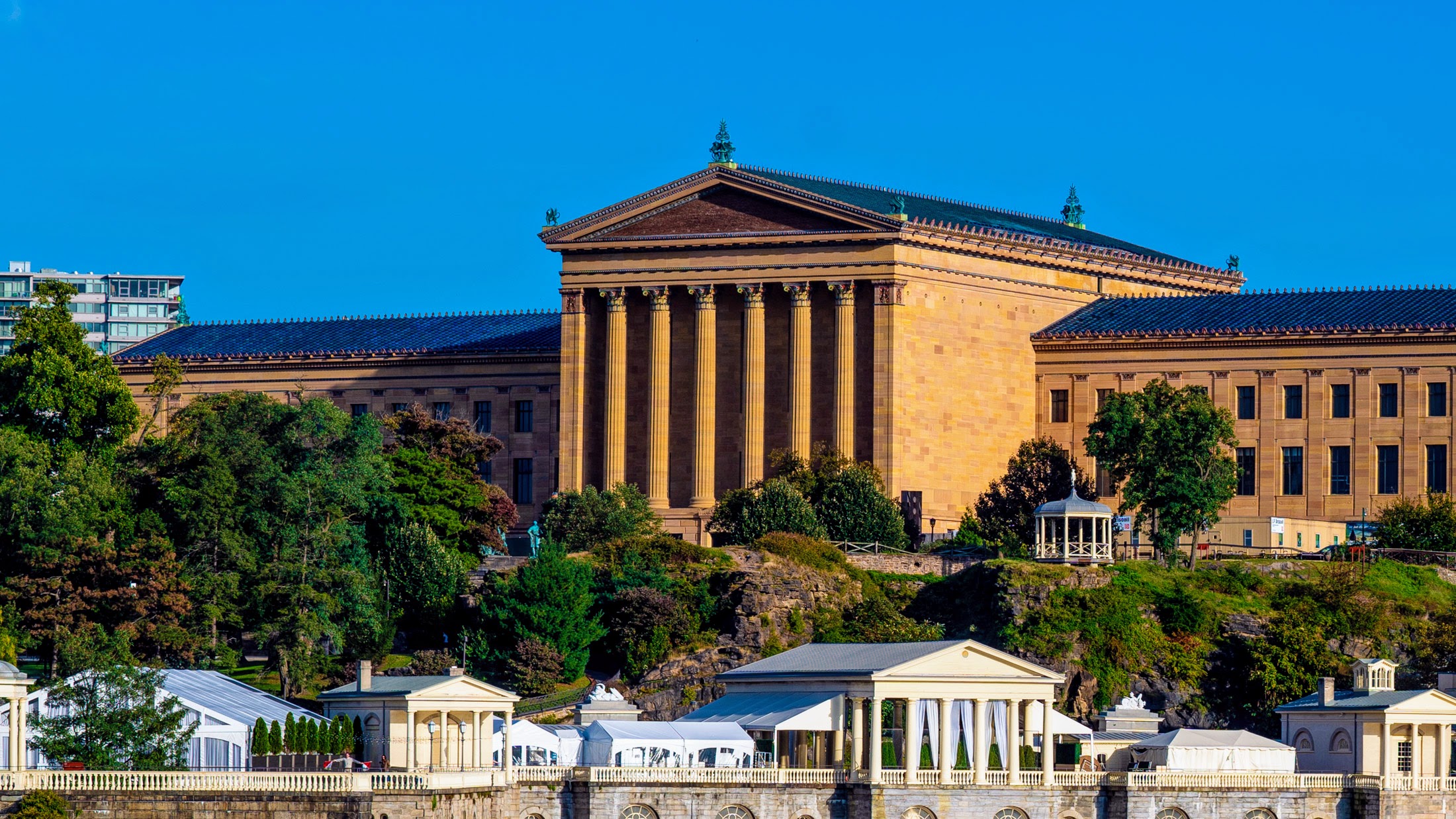
    Philadelphia Museum of Art, Philadelphia, PA

    When John Suau took the helm of the organization, it was just over 50 years old and experiencing a mid-life crisis. With the region’s museum population, the region holds the most collections, employs the most museum professionals, and educates the most university students in the country.


    Each year, the Mid-Atlantic Association of Museums presented a conference in one of the region’s cities, including Albany, Newark, Philadelphia, and Baltimore. These three-day programs included professional development sessions for museum professionals from all types and sizes of institutions.

    As one of six regional museum associations, MAAM is the country’s oldest.


    John immediately began to update the organization’s website and was a pioneer user of mass email newsletters to help reinvigorate the organization and raise the group’s profile in the museum community. His work included redesigning the association’s logo, which is still used today.

    Early in his tenure, John was inspired to create Building Museums, a three-day symposium about the expansion of existing and the creation of new museum facilities. Based on the community interest in a short workshop, John worked with the presenters to create a program that raised the profile of MAAM on both a national and an international level. That program is still in existence, some 15 years after the workshop in Albany.

    Building Museums brochure, 2006

    During his tenure, John watched the Mid-Atlantic Association of Museums membership grow exponentially with over 2,000 members at his departure. John’s work served as a template for other museum association’s educational programs nationally and internationally.

    The Building Museums program has produced two books by the content experts since the inception of this conference.

    Walt Crimm

    John led MAAM with enormous creative energy and enthusiasm, expanding it’s offerings to membership and launching a major new set of conference initiatives that took the regional association into national a platform for information. His integrity and follow through delivered everything he promised time after time.

    Walt Crimm, Principal, Walt Crimm Associates
  • Diversity at AAM

    Diversity at AAM

    I served as the first diversity officer for the AAM. I was charged with advancing diversity and equity in museum practice at the American Alliance of Museums. I initiated the first Diversity Committee in this role by bringing their voices together.

    I began my work with the AAM Accreditation and the Museum Assessment Program (MAP) programs. I was later contracted to coordinate the first hemispheric conference of the Americas. This was in partnership with the International Conference of Museums (ICOM).

    The five-day conference, “Museums and Sustainable Communities,” included delegates from Canada, the USA, Mexico, and Central and South America. The meeting was hosted in San José, Costa Rica, on April 15-18, 1998. This hemispheric conference was the first of its kind. It laid the groundwork for what is now a biannual conference of ICOM.

    After this successful conference, I continued my work at AAM as the manager for professional education and diversity. In this role, I created the first national coalition of diverse museum professionals. This coalition served as the foundation for the AAM Diversity Committee today.

    I began this important work with the help of many museum leaders. I brought together leaders from eight professional associations. These include the African American Association of Museums. They also include the AAM Asian Pacific American Professional Interest Committee. The other committees are the AAM Latino American Professional Interest Committee and the AAM Native American Professional Interest Committee. Additionally, the AAM Gay and Lesbian Professional Interest Committee participated. The AAM AIDS Network, the AAM Committee for ADA Concerns, and the Council of American Jewish Museums were also involved.

    These groups joined together to form what is now known as the AAM Diversity Committee. Together they worked to create programming and cross-cultural events. They also developed funding initiatives and a strategic agenda. The AAM Board of Directors participated in these efforts.

    Significant accomplishments from that work include:

    • The 2000-2001 annual meetings presented over sixty-five sessions focusing on multicultural issues in museums. Coalition members developed most of these professional education panels.
    • The coalition also raised more than $10,000 for scholarships. This funding facilitates the participation of ethnic minorities and other under-represented groups in annual meetings. It also supports their involvement in professional education programs of AAM.
    • As a result, the association awarded 35 scholarships to museum professionals. These professionals came from diverse backgrounds and interests. They attended the annual meetings and professional education seminars from 2000-2001.
    • At the November 2000 AAM board meeting in Washington, D.C., participants from the AAM Board of Directors met with representatives from the AAM Diversity Coalition. They engaged in a two-day strategic planning meeting.

    A copy of the report is available. The final AAM Strategic Agenda for Action provides a benchmark. This illustrates what the leaders in the museum field proposed in March of 2001.

    “Museums exist to celebrate the richness of the diverse communities that we serve…”

    Donald Duckworth, Director, The Bishop Museum, Hawai’i
    Odette Diaz Schuler, Deputy Executive Director at Center for the Advancement and Study of International Education
    Odette Diaz Schuler

    John and I have had the opportunity to work together on various projects through the American Alliance of Museums (AAM). Chiefly, the first-ever Summit of Museums of the Americas and the formation of the AAM’s Diversity Coalition…I can recommend him without reservation for any project having to do with cultural properties, as he is such a well-rounded and skilled individual.

    During my tenure, I collaborated on creating “Leadership through Diversity.” It is a national program developed by the AAM. The program was developed in partnership with the Smithsonian Institution Center for Education and Museum Studies. The workshop was presented at six regional museum association conferences and reached over 250 diverse museum professionals.

    Tania Said

    John and I worked together developing and presenting diversity training workshops for museums professionals around the country. He helped make the workshops fun, engaging, informative, and practical. Feedback from participants was excellent…John’s energy and thinking were invaluable.

    Tania Said, Visitor Advocate / Director of Education, David Owsley Museum of Art, Ball State University
  • Museums and Sustainable Communities

    Museums and Sustainable Communities

    Museums and Sustainable Communities Final Report, 1998

    In 1998, I was contracted by the American Alliance of Museums to coordinate the first hemispheric conference of museums. The conference, “Museums and Sustainable Communities” brought museum leaders from Canada to Chile together in San José, Costa Rica, in April of 1998 for a three-day summit.

    The meeting resulted in a report that summarizes the discussions on the role of the museum within the community as it relates to education, cultural heritage, technology, emergency preparedness, and cultural tourism.

    The conference report examines culture’s role in the development process through case studies and statements from major international agencies.

    The conference was conducted as part of the ICOM Triennial Program 1995-1998 and was organized in cooperation with the Institute for Latin American Museology (ILAM).

    Jerold Kappel

    John served as my project director for the groundbreaking Summit of the Museums of the Americas in Costa Rica. It was an intense 5 day event with multiple moving pieces and John put in an extraordinary effort. I returned to DC the day after the event and John stayed in Costa Rica to work with our in-country organizing partner. Museum and cultural colleagues still speak about that highly interactive summit and what it accomplished. John was a critical piece of that success.

    Jerold Kappel, CFRE, Consultant