Category: Exhibit

  • Sustaining Digital Momentum: A Crucial Strategy for Museums and Libraries

    Sustaining Digital Momentum: A Crucial Strategy for Museums and Libraries

    Introduction

    The COVID-19 pandemic was a seismic event that forced museums and libraries to shut their doors, shifting their focus to digital platforms almost overnight. As physical spaces became inaccessible, these cultural institutions had to adapt quickly, discovering new ways to reach and engage their audiences digitally. From virtual tours and online exhibitions to live-streamed events and digital archives, the shift to digital opened up new possibilities for global outreach. But, as the world emerged from the pandemic and restrictions eased, many institutions are retreating from these digital innovations, refocusing only on live programs. This article explores how museums and libraries have missed a crucial opportunity by not sustaining their digital momentum in the post-COVID world, while also highlighting examples of those who got it right.

    The Digital Shift During COVID-19

    During the pandemic, museums and libraries found themselves at a crossroads. With physical doors closed, they turned to digital platforms to continue serving their communities. This shift led to a surge in online content, including virtual tours, webinars, online workshops, and more. Institutions before viewing digital as a supplementary tool began to see it as an essential means of connection. For many, this period of digital innovation allowed them to reach broader, more diverse audiences, including those who never have set foot in their physical locations.

    One of the most famous examples of this digital shift was the National Cowboy & Western Heritage Museum in Oklahoma. During the pandemic, the museum’s security guard, Tim Send, took over its social media accounts and quickly became an internet sensation.

    His endearing, humorous posts not only entertained audiences but also dramatically increased the museum’s online following.

    This example underscores the power of digital engagement, where creativity and authenticity can significantly boost an institution’s profile.

    Another example is the Getty Museum in Los Angeles, which launched the #GettyMuseumChallenge. The museum encouraged people to recreate famous artworks using household items, a challenge that went viral and generated enormous engagement.

    The challenge highlighted how digital content fosters creativity and community during difficult times.

    The happiest of endings is the publication of a book including the best of submissions. Talk about engagement, the Getty’s program is something to be copied for continued engagement.

    Post-COVID: A Retreat from Digital?

    As the pandemic subsided and institutions reopened, there was a noticeable retreat from the digital-first strategies that had been so successful during COVID-19. Museums and libraries, eager to reestablish their on-site presence, shifted their focus back to in-person programming. While this return to physical spaces was essential for community engagement and economic recovery, it often came at the expense of the digital innovations developed during the pandemic. Many institutions scaled back their online offerings, viewing them as temporary solutions rather than permanent strategies.

    Unfortunately, not all institutions can survive the financial strain of prolonged closures, leading to permanent closures for some. For example, the San Francisco Art Institute, a historic institution known for its art programs and galleries, closed its doors in 2022 after 151 years of operation. The pandemic exacerbated its financial difficulties, and despite efforts to sustain the institution, it closed.

    Fortunately for the community, the school was purchased with an endowment of roughly $30 million. Importantly, the new arts nonprofit’s advisory committee is made up of senior heavy hitters in the SF art arena

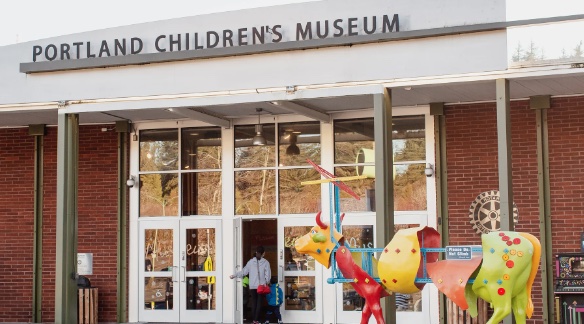
    The Portland Children’s Museum, located in Portland, Oregon, was a beloved institution dedicated to the education and enrichment of children through interactive and imaginative play. Unfortunately, the Portland Children’s Museum permanently closed its doors in June 2021 due to financial difficulties exacerbated by the COVID-19 pandemic. The decision to close was a significant loss for the community, as the museum had been a cherished resource for families for many years.

    Efforts are in motion to rebuild a new children’s museum for the city.
    These closures highlight the precarious position that many cultural institutions found themselves in during the pandemic. While some can adapt and innovate, others struggle to survive, demonstrating the critical need for a balanced approach that includes both digital and physical engagement.

    The Missed Opportunity

    The retreat from digital is a missed opportunity for museums and libraries. The pandemic demonstrated that digital platforms significantly expand the reach and impact of these institutions, connecting them with global audiences and offering new ways to experience culture and knowledge. By scaling back digital efforts, many institutions have inadvertently alienated the new audiences they had attracted during the pandemic. Additionally, the hybrid model—where digital and in-person experiences coexist—offers a sustainable path, allowing institutions to continue reaching those who can’t visit in person while enhancing the on-site experience with digital elements.

    Who Got It Right?

    While many institutions retreated from digital, some recognized the potential of maintaining and even expanding their online presence. The New York Public Library (NYPL) is a prime example of an institution that continued to rank digital engagement post-COVID. During the pandemic, the NYPL ramped up its digital content, offering virtual storytimes, online book clubs, and expanded access to its digital collections. Rather than scaling back as physical branches reopened, the NYPL has continued to invest in its digital platforms, recognizing that they offer a unique way to reach audiences beyond the city.

    Another excellent example is the Smithsonian Institution, which embraced a hybrid model by enhancing both its online and on-site offerings. The Smithsonian created the “Smithsonian Open Access” initiative, making millions of images and resources freely available online for public use.

    This commitment to digital accessibility has not only expanded the Smithsonian’s reach but also reinforced its role as a leader in educational resources.
    The Missed Opportunity

    The retreat from digital is a missed opportunity for museums and libraries. The pandemic demonstrated that digital platforms significantly expand the reach and impact of these institutions. They connect them with global audiences and offer new ways to experience culture and knowledge. By scaling back digital efforts, many institutions have inadvertently alienated the new audiences they had attracted during the pandemic. Additionally, the hybrid model—where digital and in-person experiences coexist—offers a sustainable path. By allowing institutions to continue reaching those who can’t visit in person while enhancing the on-site experience with digital elements.

    Social Media: A Missed Marketing Opportunity

    One of the most puzzling aspects of the post-COVID digital retreat is the way many museums and libraries bury their social media links at the bottom of their websites. During the pandemic, social media emerged as one of the most powerful tools for engaging with audiences worldwide.

    These platforms allowed institutions to share content quickly, foster community interactions, and keep visibility even when physical spaces were closed. Yet, despite this proven effectiveness, many institutions still treat social media as an afterthought.
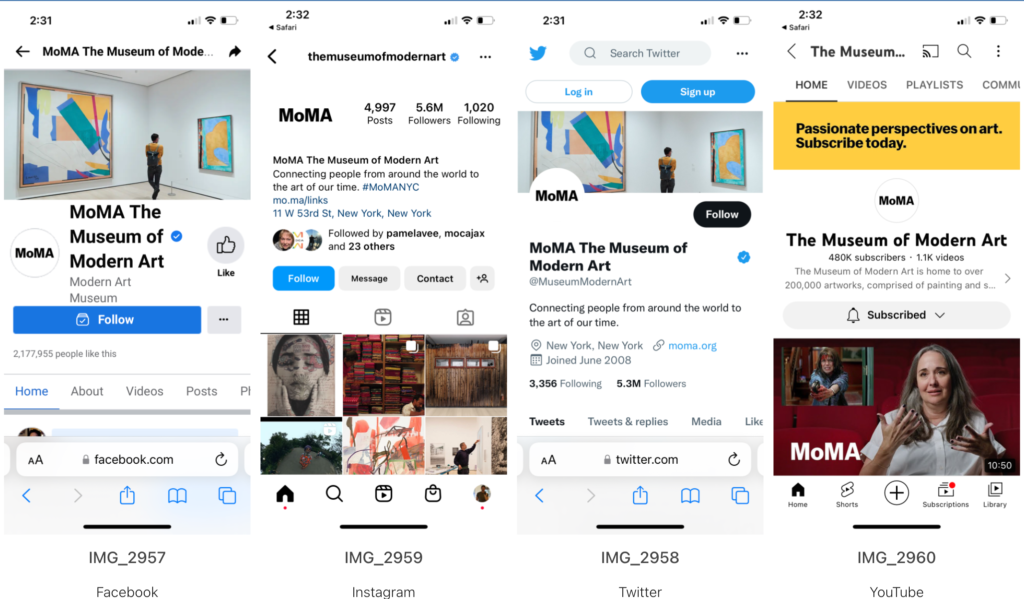
    Post-COVID, social media should be front and center on museum and library websites. They serve as the main attraction for online visitors. These channels are not just marketing tools. They are dynamic platforms for delivering content, engaging with users, and building global communities. By relegating social media links to the bottom of their websites, institutions miss out on the best opportunity to reach new audiences and keep relevance in an increasingly digital world.

    Why Digital Should Stay a Priority

    • Global Reach: Digital platforms break down geographical barriers, allowing institutions to reach a global audience. This expanded reach can drive engagement, increase visibility, and attract new supporters.
    • Accessibility: Digital content can make museums and libraries more accessible to people with disabilities, those with limited mobility, and others who face barriers to physical attendance.
    • Innovation: Maintaining a strong digital presence encourages ongoing innovation, allowing institutions to experiment with new formats, technologies, and ways of engagement.
    • Resilience: A robust digital strategy can help institutions stay resilient in the face of future disruptions, whether due to pandemics, natural disasters, or other unforeseen events.

    Conclusion

    The COVID-19 pandemic was a turning point for museums and libraries, pushing them to embrace digital platforms in ways they had never done before. But, as these institutions move ahead, they mustn’t lose sight of the lessons learned during the pandemic. By prioritizing digital engagement, museums and libraries can stay relevant, accessible, and resilient in an ever-changing world. The future of these institutions lies not in a return to the past but in a hybrid model that fully integrates the digital with the physical, offering the best of both worlds to their audiences.
  • Exploring the Evolution of World’s Fairs: Celebrating Innovation, Culture, and Global Connections

    Exploring the Evolution of World’s Fairs: Celebrating Innovation, Culture, and Global Connections

    World’s fairs, known as expos, have historically been pivotal in showcasing global innovation, cultural diversity, and international cooperation. These grand events serve as platforms for nations to exhibit their technological advancements, cultural heritage, and future visions while fostering dialogue and collaboration on a global scale.

    Since 1992, the world’s fairs have continued to evolve, adapting to technological advancements and global trends. These events highlight cutting-edge technologies and sustainable practices and promote dialogue on pressing global issues such as food security, urban development, and environmental sustainability.

    Embracing Digital and Physical Experiences

    In the digital age, world fairs have expanded their reach and impact through virtual platforms alongside physical exhibits. Virtual tours, live streams, and interactive online content allow global audiences to engage with expo themes and pavilions remotely, enhancing accessibility and participation.

    Iconic Examples

    Expo 1992 Seville, Spain

    Expo 1992 in Seville celebrated the 500th anniversary of Columbus’ voyage to the Americas, showcasing Spain’s rich cultural heritage and technological achievements. Explore more about Expo 1992 Seville here.

      Expo 2000 Hannover, Germany

      Expo 2000 in Hannover was themed “Humankind, Nature, and Technology.” It emphasized sustainable development and featured the iconic Expo Axis structure, symbolizing futuristic architecture and innovation. Discover Expo 2000 Hannover here.

        Expo 2010 Shanghai, China

        One of the largest world’s fairs in history, Expo 2010 Shanghai attracted over 73 million visitors. It showcased modern urban planning, sustainable development, and cultural diversity through iconic pavilions like the China Pavilion. Visit Expo 2010 Shanghai here.

          Expo 2015 Milan, Italy

          Themed “Feeding the Planet, Energy for Life,” Expo 2015 focused on global food security and sustainability. It featured interactive exhibits and pavilions from over 140 countries, highlighting agricultural innovations and environmental stewardship. Explore Expo 2015 Milan here.

            Expo 2020 Dubai, UAE

            Initially scheduled for 2020 but held in 2021 due to the COVID-19 pandemic, Expo 2020 Dubai continued the tradition of innovation with a focus on sustainability and mobility. It introduced groundbreaking pavilions like the Sustainability Pavilion, which embodied cutting-edge environmental design. Learn more about Expo 2020 Dubai here.


              Future Outlook

              Looking ahead, world’s fairs will continue to evolve as catalysts for innovation and cultural exchange. Whether experienced physically or virtually, these events will remain integral in shaping our collective vision for a sustainable and interconnected world.

              The next World’s Fair is scheduled to be held in Osaka, Japan. Initially planned for 2025, the event is officially named “Expo 2025 Osaka, Kansai, Japan.” It will take place from April 13 to October 13, 2025. The theme of Expo 2025 Osaka is “Designing Future Society for Our Lives,” focusing on sustainable development and creating a better future for humanity. For more information about Expo 2025 Osaka, visit the official website: Expo 2025 Osaka, Kansai, Japan.

            • Florida Cancels Culture: The Long-Term Impact of $32 Million Arts Funding Cuts

              Florida Cancels Culture: The Long-Term Impact of $32 Million Arts Funding Cuts

              The recent cancellation of $32 million in arts funding in Florida has sparked widespread concern among artists, educators, and community leaders. The arts sector is crucial to the state’s economy, culture, and education system. This article explores the potential long-term consequences of these funding cuts and what they mean for Florida’s future.

              Economic Impact

              Tourism and Local Economy

              Florida is known for its vibrant cultural scene, attracting tourists worldwide. Art festivals, galleries, theaters, and museums are significant draws contributing to the state’s tourism revenue. For example, the annual Miami Art Basel fair brings in millions of dollars and thousands of visitors. With reduced funding, the quality and number of these cultural attractions may decline, leading to a potential drop in tourism and local economic activity.

              Small Businesses

              Local businesses such as restaurants, cafes, and retail shops often thrive during arts events and festivals. Reduced funding could lead to fewer events, which means less business for these establishments. This can result in lower revenues and even closures, further impacting the local economy.

              Educational Impact

              Arts Education

              Schools and educational programs often depend on state funding to provide comprehensive arts education. Reduced financial support could limit students’ opportunities to engage with the arts, which are essential for fostering creativity, critical thinking, and emotional expression. For instance, school music programs might have to cut back on purchasing instruments or hosting performances, depriving students of valuable experiences.

              College and University Programs

              Higher education institutions might also feel the pinch. University arts programs, which often rely on state grants, could face budget cuts, leading to fewer scholarships, reduced course offerings, and diminished support for student projects. This could make arts education less accessible and lower the quality of training for aspiring artists.

              Cultural and Community Impact

              Public Art Projects

              Public art projects, such as murals and sculptures, enhance community spaces and promote civic pride. These projects often rely on state funding for commissioning and maintenance. Funding cuts could halt new projects and neglect existing ones, leading to a less vibrant public space.

              Community Outreach Programs

              Many arts organizations run community outreach programs that bring art to underserved populations, including low-income families and senior citizens. Reduced funding could mean fewer opportunities for these groups to participate in cultural activities essential for social inclusion and well-being.

              Quality of Life

              Healthcare Partnerships

              Art therapy programs in hospitals and clinics, which use creative processes to help patients heal and cope with illness, might suffer. These programs often rely on state funding to operate. Cuts could reduce the availability of art therapy, negatively impacting patients’ recovery and emotional health.

              Rehabilitation Programs

              Programs that use art as a rehabilitation tool in prisons and juvenile detention centers could also face reductions. These programs help inmates develop new skills, express themselves constructively, and prepare for reintegration into society. Funding cuts might limit these valuable initiatives, affecting rehabilitation outcomes.

              Long-Term Cultural Development

              Future Generations of Artists

              Support for emerging artists and arts education is crucial for nurturing future generations of cultural leaders. Funding cuts could stifle the development of young artists, leading to a decline in the creative talent pool and innovation within the arts sector. Programs like artist residencies and youth art competitions might be scaled back or discontinued.

              Innovation and Creativity

              The arts drive innovation and creativity, which is essential for a vibrant, forward-thinking society. Reduced funding could limit the scope of creative initiatives and cultural projects, stifling innovation and slowing cultural progress. For example, experimental theater companies and avant-garde art collectives might struggle to survive without adequate support.

              Conclusion

              The cancellation of $32 million in arts funding in Florida has far-reaching implications beyond the immediate financial impact. Significant concerns include a potential decline in tourism, job losses, reduced educational opportunities, and weakened community bonds. Moreover, the long-term effects on cultural heritage, public well-being, and the development of future artists highlight the critical importance of sustained investment in the arts. As Florida navigates these challenges, it is essential to consider the broader value of the arts to the state’s economy, education system, and social fabric.

            • The Future Museum Experience: A Seamless Blend of Physical and Digital Engagement

              The Future Museum Experience: A Seamless Blend of Physical and Digital Engagement

              The future of museum visits promises to be an exciting blend of physical presence and digital engagement, creating a seamless, personalized, and immersive journey for every visitor. From discovery and planning to post-visit interaction, here’s how the ideal user experience unfolds for the museum-goer of tomorrow.

              Pre-Visit: Discovery and Planning

              The journey begins long before setting foot in the museum. Potential visitors discover upcoming exhibits and events through engaging social media campaigns on platforms like Instagram, Facebook, and TikTok. The museum’s visually appealing website and mobile app offer an intuitive interface where users can explore detailed previews of exhibits via virtual tours and augmented reality (AR) experiences.

              Creating an account unlocks personalized recommendations based on the user’s interests and previous visits, ensuring a tailor-made experience. Ticket purchasing is streamlined, with options for timed entries to manage crowd flow and digital tickets sent directly to the user’s device. Interactive content such as polls, quizzes, and countdowns on social media keeps potential visitors engaged and excited about their visit.

              Arrival: Seamless Entry

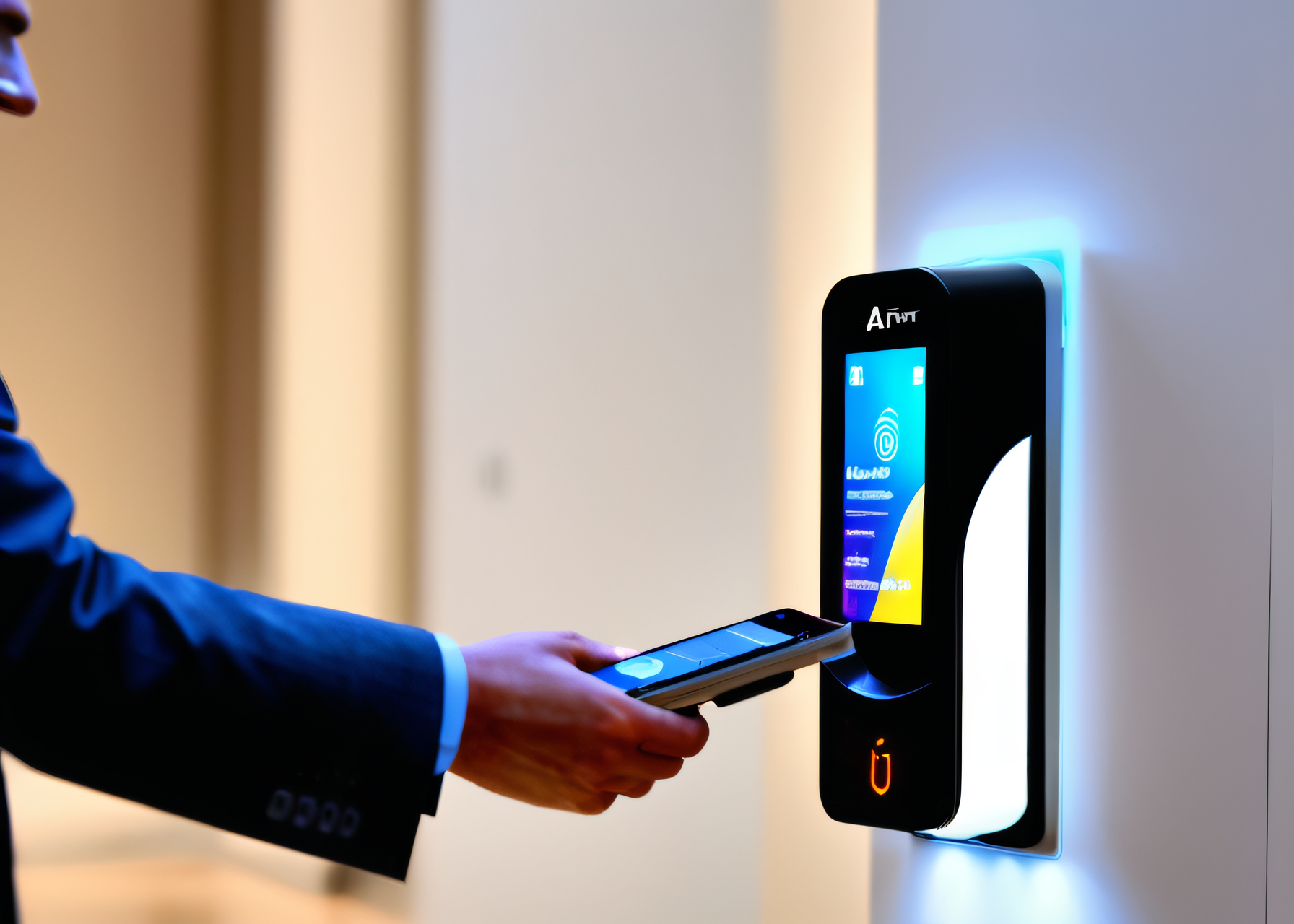
              On the day of the visit, seamless entry is facilitated by digital tickets or membership cards that allow quick, contactless check-in via QR codes or NFC technology. Welcome kiosks provide a brief orientation, current events, and exhibit highlights, ensuring visitors are well-informed and ready to explore.

              Social media engagement begins as soon as visitors arrive, with encouragement to share their check-in on social platforms using location tags and museum-branded hashtags. Custom AR filters enhance these posts, allowing visitors to create unique and shareable content.

              During the Visit: Exploration and Engagement

              Once inside, cutting-edge technology elevates the museum experience. An interactive map on the museum’s app provides real-time navigation, guiding visitors to their points of interest. AR technology allows users to scan exhibits for immersive experiences, offering in-depth information, 3D models, and historical context.

              Personalized self-guided tours cater to individual preferences and time constraints, ensuring a bespoke journey through the museum. Touchscreens and holographic displays bring exhibits to life with interactive elements, while virtual reality (VR) installations offer immersive experiences, such as historical reenactments or interactive art pieces.

              Social media remains integral, with the museum posting live updates and stories highlighting special events, live performances, or surprise guest appearances. Visitors can participate in social media challenges or scavenger hunts, exploring exhibits and sharing their progress online. Designated photo spots with unique backdrops encourage visitors to take and share photos, enhancing the communal experience through shared hashtags.

              Post-Visit: Continued Engagement

              The experience doesn’t end when visitors leave the museum. The app sends personalized follow-up content, such as articles, videos, and notifications about upcoming exhibits, ensuring ongoing engagement. Visitors are prompted to share their favorite moments and discoveries on social media, tagging the museum and using official hashtags, which the museum can then share on its channels to foster a sense of community.

              Feedback and reviews collected via social media help the museum continually improve future experiences. Visitors can access an online library of educational resources, including videos, articles, and virtual lectures, allowing them to continue learning. Opportunities for collaborative projects, such as community-curated exhibits or digital archives, provide further avenues for engagement.

              Building a Connected Community

              Social media engagement is pivotal in building a connected community around the museum. Consistent use of unique hashtags for different exhibits or events allows the museum to track engagement and foster a sense of belonging among visitors. Partnerships with influencers and local content creators broaden the museum’s reach and attract new audiences.

              Through social media stories and live streams, interactive storytelling offers behind-the-scenes looks at exhibit setups, interviews with curators, and other exclusive content. Informative posts share educational insights related to exhibits, keeping the audience informed and engaged. Virtual events like live Q&A sessions, virtual tours, and workshops on social media platforms enable remote audiences to participate and engage.

              Embracing Technology and Sustainability

              AI and data analytics play a crucial role in optimizing the museum experience. By analyzing visitor behavior, the museum can enhance exhibit layouts and personalize future visits. AI-driven tools also provide real-time translation, sign language interpretation, and other accessibility features, ensuring inclusivity for all visitors.

              Sustainability is also a key consideration. Digital tickets and information reduce paper usage, while energy-efficient technologies and eco-friendly materials promote sustainable practices. Information on the museum’s sustainability efforts and ways visitors can contribute enhances environmental awareness.

              Conclusion

              The future museum experience is characterized by a seamless integration of physical and digital interactions, personalized content, and continuous engagement. By leveraging advanced technologies and social media, museums can create unique, educational, and memorable experiences for every visitor, fostering a connected and engaged community.

            • Museums, Exhibits, and Digital Technology

              Museums, Exhibits, and Digital Technology

              As we begin the new year in 2021, the COVID-19 public health crisis continues to impact the museum sector: intermittent closures, widespread layoffs, and a scramble to create engaging visitor experiences, inside and outside the museum. This article explores digital technology solutions that have helped museums with visitor engagement during the crisis.

              2020 was all about digital engagement.

              From business meetings on Zoom to family and friends on FaceTime, the planet has shifted to virtual experiences for professional and personal connections like never before.

              Similarly, museums were forced to address their ability to engage audiences from a distance like never before. Prior to COVID, museum websites provided mostly general information like a directory listing for the real experience, its exhibits and programs. After being forced to close their physical spaces, the digital realm for museums came into sharper focus.

              Audience engagement with museums in 2020 was overwhelmingly digital.

              Graph of interest in virtual museum tours 2020
              “Virtual museum tours” in 2020.

              Did it peak in March? According to Google, “virtual museum tour” was one of the most popular search terms in March 2020, at the onset of COVID-19 in the US. However, the search term hit its peak in the third week of March, and interest began to wain after just one week.

              Once closures became widespread, digital resources were prioritized to provide access to exhibits and programs during closures. YouTube and 360º technology were used to create virtual tours of the museum. Web sites were built to host new digital exhibits. Finally, some new platforms have created ways to use technology both inside and outside the museum with greater ease.

              Museums 360º

              One of the most immediate responses from the smallest to the grandest of museums was to create virtual visits using 360º photos.

              Interior 360º image of Smithsonian National Museum of Natural History

              Here the virtual visitor experiences what is sometimes a strange 2D version of space.

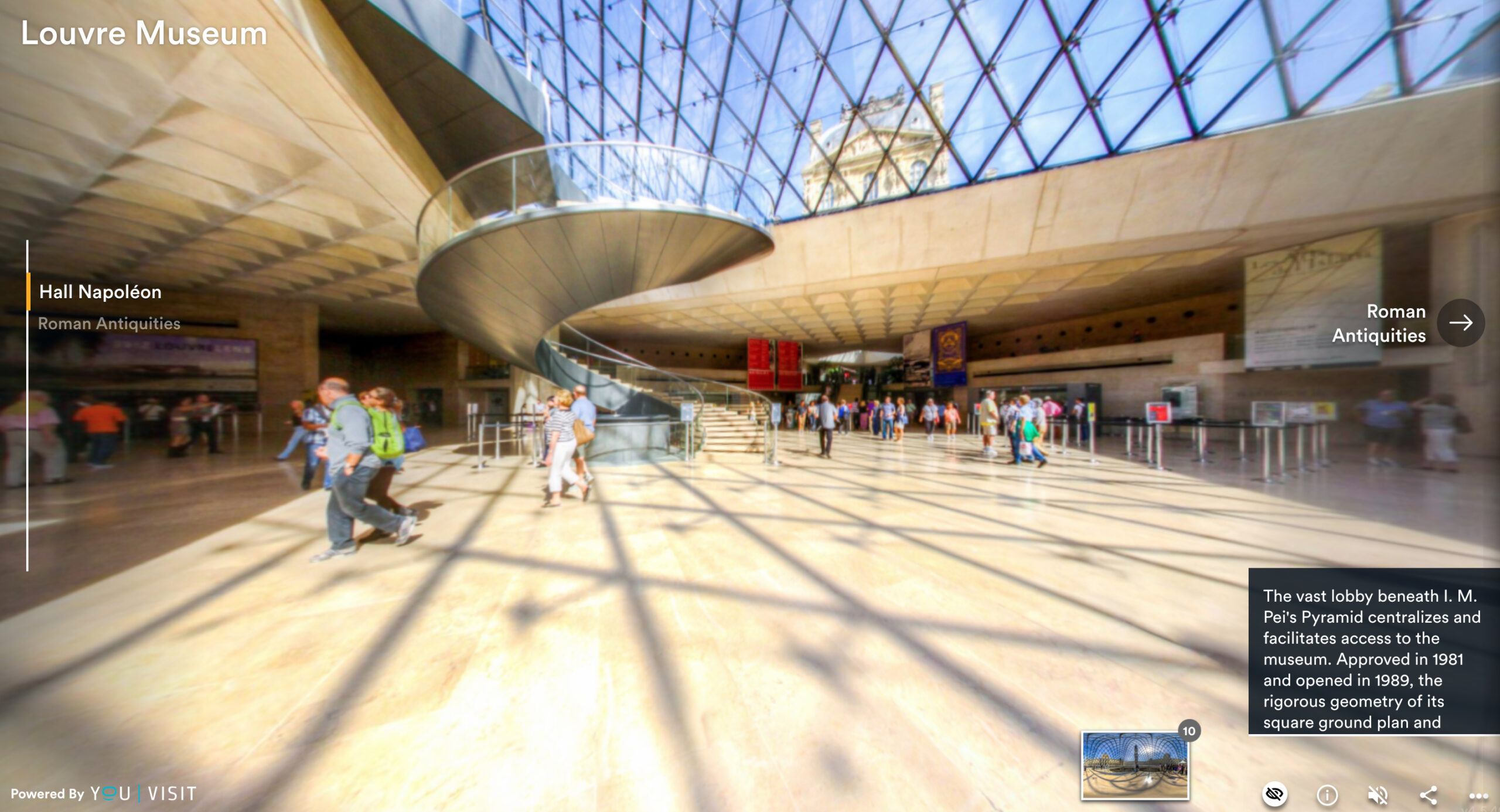
              Virtual visitors learned quickly that the experience cannot compare to the awe-inspiring feeling one gets when experiencing Frank Lloyd Wright’s spiraling galleries in the Guggenheim, I.M. Pei’s dramatic glass pyramid entrance to the Louvre, or Michelangelo’s Sistine Chapel inside the enormous Vatican museums.

              The results fall flat, and the sense of being in the space is lost in translation. There is little, if any, didactic interpretation. Navigation can be difficult from platform to platform, and the visitor may end up staring at a close-up of the marble floor without exit.

              Guggenheim Museum, New York
              Louvre, Paris
              Vatican Museums, Vatican City

              The zoom features are helpful, but without intuitive navigation or a “virtual tour guide,” the overall experience is disappointing. This technology is best left to the real estate industry.

              YouTube Videos

              Another digital resource used to recreate the real visitor experience is YouTube. Though not a new resource for museums, the production of new videos from museums small and large increased substantially during 2020.

              The Met 360° Project: Great Hall, Metropolitan Museum of Art, New York

              Like the Metropolitan Museum of Art in New York, many museums used 360º videos to guide virtual visitors through the museum using videos on YouTube.

              While offering a more structured way to direct visitors through virtual spaces than the 360º technology above, the experience is still not the same as standing in front of great art.

              However, YouTube provides museums with a platform for content that can be used to engage new audiences in unique and targeted ways. Three examples below include MoMA‘s virtual view of Van Gogh’s “Starry Night,” with Anna Deavere Smith’s reading of a letter from the artist to his brother, Theo. The Rijksmuseum created a series of YouTube videos called “Is It Art?” which examine contemporary artistic creations with more traditional art forms from the museum’s collections as a way of drawing younger audiences into the decisions of labeling them “art”. Finally, London’s National Gallery used YouTube to create a 5-minute meditation with Odilon Redon’s painting as its visual background.

              Museum of Modern Art, New York

              Rijksmuseum, Amsterdam

              The National Gallery, London

              All of these videos deliver content to audiences far and wide. Their success depends on their dissemination. Most museums use their social media outlets to market this content.

              Online Exhibits

              Less pervasive but equally important are online exhibits. These digital stories provide virtual visitors with learning opportunities outside the museum.

              Smithsonian National Portrait Gallery, Washington, DC

              For the curator and educator, these exhibits provide ways to organize and present collections in an evergreen format with the ability to edit and update content as the exhibit ages. The Smithsonian National Portrait Gallery‘s exhibit “First Ladies of the United States” is a great example of this type of exhibit.

              Free from the limitations of physical space, these exhibits allow museums to create more robust learning resources for the public. They often feature artworks that may not be visible to the public, even when open.

              Many of these digital experiences incorporate audio and video media. Some use creative ways of presenting the information. What is unique about these exhibits is the lack of a physical exhibit. The experience is designed to be completely virtual. The Museum of Modern Art organized an online exhibit about drawing in the 20th Century as the permanent online exhibit reflecting the museum’s real exhibit which was on view from November 21, 2010, to February 7, 2011. The Smithsonian Renwick Gallery was forced to close Janet Echelman’s “1.8 Renwick” exhibit shortly after it opened in 2020. It created a website to show the exhibit online until it reopens in 2021. The Smithsonian Cooper-Hewitt Design Museum used a website to curate content for “Willi Smith – Street Couture” an exhibit that lives on thanks to digital communications.

              Museum of Modern Art, NYC
              Smithsonian American Art Museum, Washington, DC
              Willi Smith: Street Couture exhibit
              Cooper-Hewitt, Smithsonian Design Museum, NYC

              The success of these online exhibits depends on each site’s accessibility and navigation. They can require substantial resources, including hours of research by curators, the scripting by educators, and time for production by technology teams. Their visibility depends upon the integration of the museum’s digital and marketing strategies.


              Spotlight: The Queen and The Crown

              One of the best examples of an online exhibit is the Netflix and Brooklyn Museum exhibit “The Queen and The Crown”.

              Netflix and the Brooklyn Museum

              Drawing on the popularity of “The Crown,” the exhibit launched just a few days before the 2020 season premiere.

              The exhibit resolves the usual spatial and navigational issues experienced in most virtual exhibits with short video clips and intuitive navigation. There is quiet music playing in the background, and the swooping noises help reassure successful navigation. The mannequins with the dresses can spin around, as the arrows indicate. It has a very smooth transition from a 360º museum experience to an online exhibit providing the visitor with a unique way to engage and learn.

              Using pop-up pages for details, the site sound effects in the background add to the sense of a reverberant museum hall. Overall, this online exhibit is one of the best of its kind.


              Smartify Virtual Tours

              Guided tours lead by a docent or museum device audio guides were standard experiences before COVID-19 began to shut down museums everywhere.

              Smithsonian National Portrait Gallery, Washington, DC

              Like the Smithsonian National Portrait Gallery, many museums have created audio tours of specific exhibitions. Most large art museums provided handheld devices in several languages. With the onset of COVID, docent-led tours and handheld devices have become obsolete. The health crisis has also made museums acutely aware of the risks involved with interactive exhibits – from audio guides to touch screens.

              Smartify is a digital channel that delivers museum content to users’ devices via a web app as well as a mobile app. Started five years ago, the company currently hosts over 120 museum partners from around the world.

              Prior to COVID-19, Smartify was focused on the mobile experience. The scan-to-learn technology allows users to scan the artwork to learn more on smart devices. With COVID-19, the company expanded the delivery of content to a web app so that the tours could be more easily disseminated through digital channels and social media outlets.

              Using cloud-based software, museums are able to upload their digitized collections into the platform and then transform their content into meaningful stories using the tour building features. Tours can be designed for the general public, like the National Portrait Gallery’s tour above and they can be delivered in as many languages as the museum wants. Or, they can create audience-specific experiences using customized tours.

              For example, the Nelson-Atkins Museum of Art used Smartify to create a wonderful ASL tour for its deaf communities using videos of sign interpreters. The British Museum created a tour exploring LGBTQ histories using its collections.

              Finally, one of the best things about the Smartify platform is its universality. Once a museum reopens, the visitor can still use Smartify inside the museum to access the tours and more. The Belvedere Museum in Vienna used Smartify to replace its handheld devices when it reopened in the summer of 2020 in an effort to reduce the risk of the spread of COVID.

              Nelson-Atkins Museum of Art, Kansas City
              The British Museum, London
              Belvedere Museum, Vienna

              The resulting experience via the Smartify platform is well-designed and allows for media files to be added, making use of YouTube videos and external content to add to the robustness of the content.

              Conclusion

              In retrospect, museums have used as many resources as possible to continue to connect with their communities. From 360º virtual tours to Smartify, each platform adds new ways to reach audiences with their content whether on a laptop at home or on a mobile device inside a museum.

              What is important for museums in 2021 is to continue to develop and deliver content via as many channels as possible. The ability to manage resources while providing a great visitor experience requires attention to the continued impact that COVID-19 will have on our lives into the new year and beyond. As they continue to evolve with their partners’ needs, digital platforms like Smartify provide museums with the best tools for any scenario.

            • Smartify: AI technology for all museums

              Smartify: AI technology for all museums

              Smartify is a free app that scans art and provides access to content in museums and galleries. Smartify users can also use it to build a personal art collection from some of the world’s best museums. Additionally, the augmented reality (AR) feature allows users to see the art in their homes. 

              smartify art app scans art
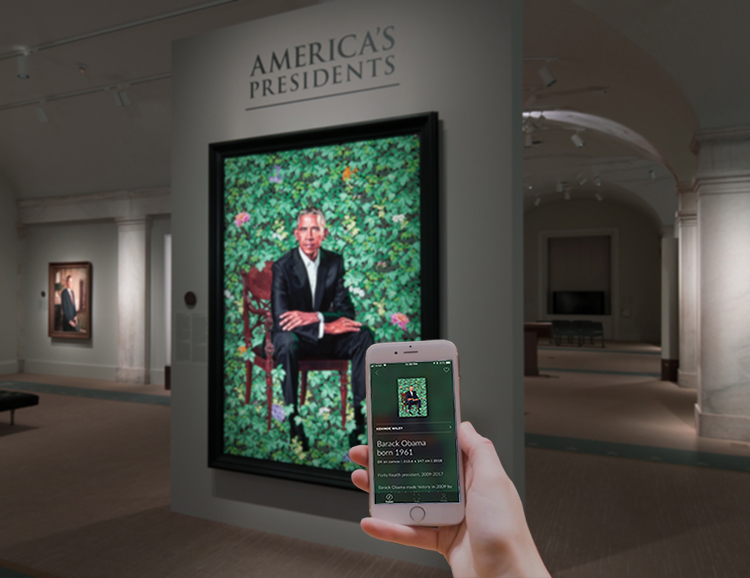
              Smartify works in the Smithsonian National Portrait Gallery’s Hall of Presidents. Pictured here is the portrait of President Barrack Obama.

              I first learned about the museum app Smartify at the Smithsonian National Portrait Gallery in front of the portrait of President Barrack Obama. There was a sign to download an app. I could deploy as a scanner on my iPhone to learn more about the Presidential portraits. I quickly downloaded it and scanned the art, and it worked. What a thrill!

              A few weeks later, I created a partnership between Smartify and the Historical Society of Washington, DC., where I was the executive director.  The platform was a perfect solution for the new museum. The goal was to deliver information about the history of the Carnegie Library to personal mobile devices. The app can be used throughout the DC History Center. Plans include expanding the content to allow scans of sculptures in and around the building.

              Scan Art Not QR Codes – Behind the App Technology

              This app eliminates the need to scan QR codes. It uses technology to recognize the art itself. This technology works on smartphones and mobile devices. And it is an art guide that provides information instantly. It works across venues and is easy to use. Smartify is a social enterprise that serves a global community of art venues, artists, and art lovers. It’s the one app you can use to scan artwork to discover content for museums around the world. 

              Case Study: Carnegie Library at Mount Vernon Square

              Carnegie Library at Mt. Vernon Square is a history exhibit about the 1903 Carnegie Library in Washington, DC. Produced in partnership with Apple, the permanent exhibition is in the Carnegie Gallery on the lower level. Originally called the “bicycle room” when it opened, the room was meticulously restored in 2019 by Apple.

              carnegie library
              Carnegie Gallery, Carnegie Library at Mt. Vernon Square

              With dramatic ceramic ceilings by Rafael Guastavino, the exhibit space includes sixteen images. They benchmark moments from the building’s 115-year history. These include conceptual designs, blueprints, and other images from the 70 years as the public library. The exhibit concludes with the 2018 renovations by Apple.

              The complete history is available at the DC History Center website. Here, learners can find the full and unedited version of the history of the 1903 Beaux-Arts building. The website includes the history of the selection of Washington, DC, as the site for the new capital city and Peter L’Enfant’s design of the District.

              To enhance the minimal content on the exhibit walls, the Historical Society partnered with Smartify to deploy additional historical images and text to visitors’ mobile devices. Visitors scan any one of the 16 images to gain access to more information. The partnership with Smartify resulted in increased visibility of the DC History Center and allows visitors to support the organization with memberships and donations.

              The platform is developed in partnership with art museums worldwide, including the Smithsonian National Portrait Gallery in Washington, DC, The Mint Museum in Charlotte, NC, and the Metropolitan Museum of Art in New York City, and many more.


            • DC Hall of History

              DC Hall of History

              John Suau conceived and directed the creation of the opening exhibit DC Hall of History, a central exhibit about the history of Washington, D.C., as portrayed by the Historical Society collections. John was the executive director of the Historical Society of Washington, D.C., in 2019, when the organization launched the DC History Center.

              Design Problem

              The space for this exhibit is very small. It is a long narrow hallway with very low ceilings. In the redesign of the building with Apple, the space would prove the most challenging. However, the exhibit “DC Hall of History,” is a pivotal exhibit for the Historical Society.

              Design Solution

              John Suau worked with Healy|Kohler Design to develop a solution for the exhibit about the history of Washington, D.C. using the collections of the Historical Society. The design solution was a wall-mounted light box and a series of four custom made display cases. Together, they provide a maximum impact on the visitor.

              John’s experience, knowledge of space design and his problem solving skills proved valuable in the creation of a visitor experience that is engaging and didactic. Furthermore, the exhibit provides educators a template from which to create a number of topics, including local commerce, transportation, leisure time in Washington, and the built environment.

              The exhibit includes a timeline which incorporates display techniques reminiscent of the Apple store downstairs. Custom display cases hold materials from the collections of the Historical Society and there is a mural map that highlights local museums and libraries with collections related to Washington history. The mission of the organization is prominently displayed over a photomontage of the organization’s public programs and exhibits.

            • Carnegie Library at Mount Vernon Square

              Carnegie Library at Mount Vernon Square

              Carnegie Library at Mount Vernon Square

              Carnegie Library at Mt. Vernon Square is one of three new exhibits in the DC History Center. This small exhibit is about the history of the iconic landmark 1903 Carnegie Library in Washington, D.C. Produced in partnership with Apple, the exhibit is located in the Carnegie Gallery on the lower level. History tells us that when it opened in 1903, this room originally served as the “bicycle room”.

              With its dramatic Rafael Guastavino ceramic ceilings, the exhibit hall includes sixteen images. Each one benchmarks a moment in the building’s 115-year history, including conceptual designs and blueprints. The exhibit documents seventy years of use as the public library, and it ends with the renovations by Apple.

              Museum-goer scans to learn more.

              To complement the two exhibits, the Historical Society partnered with Smartify to deploy content via mobile devices. Visitors can scan any one of the 16 images in the exhibit to learn the story behind each image.

              The partnership with Smartify has resulted in increased visibility of the DC History Center. Similarly, the app allows users to support the organization via a link to donate or join as a member.

            • THE BIG PICTURE

              THE BIG PICTURE

              John Suau conceived and created THE BIG PICTURE, the inaugural exhibit of the new DC History Center. The project presented an opportunity to open a new gallery space in a restored historic landmark building that was being restored by Apple with an unknown timeline.

              Design Challenge

              As outlined above, the project had a short and moving timeline. The restoration began in August 2017. The entire operations of the Historical Society were relocated to the Newseum including the majority of the collections. The remainder were relocated to offsite storage facilities. The target opening date was December 2018. However, building renovations were difficult. As in most historic restoration projects, surprises were found and delays ensued.

              Working with a very tight timeline, there were also limited resources available. John Suau created new funding opportunities for local companies to sponsor, with THE BIG PICTURE as a big part of the package. The unknown reopening date prevented the establishment of a stable environment for collections. The design solution would require an exhibit with reproductions with maximum visual impact and broad programming options.

              Exhibit Content

              Since he started in March of 2014, John Suau had been fascinated with the Capitol Photo Service collection of the Historical Society. With over 3,500 panoramic images dating from the early 1900s, Suau worked closely with a photo editor and contract researchers to select 70 images that would best serve for this exhibit. These images were curated and reproduced in various formats, from large analog screens to digital formats for touchscreens. The results provide dramatic and diverse stories that convey the rich history of Washington, D.C.

              From the DC History Center

              suau creates history exhibit
              THE BIG PICTURE exhibit

              “In the first half of the 20th century, photographers recorded milestones using panoramic technology. Very few people alive have seen them. Until now.

              THE BIG PICTURE reveals how these craftsmen captured DC history. From Rudolph Valentino’s visit to the White House to the 1924 World Series Championship, these magnificent panoramic photographs document visiting celebrities and moments of great pride.

              They celebrate the District of Columbia’s highs, acknowledge its lows, and reveal everyday life. THE BIG PICTURE presents more than 70 of the resonant images to take you back to the Washington you remember and the one you never knew. Come see these images–-several of which are blown up so large that you’ll feel like you’re a part of them–for a completely new experience of Washington’s past. THE BIG PICTURE is the context for today’s richly diverse DC, the familiar, the surprising, and the beautiful.”

              Design Solution

              John Suau found the solution in the creation of giant light boxes for mounting (and backlighting) large reproductions from a huge collection of panoramic images. Five of them were enlarged to over forty feet long and nine feet high.

              To complement the large images, the exhibit includes additional digital images. Several are featured on the opening digital screen, rolling across the screen slowly. Four groups of over a dozen more images are presented on touchscreens. These allow visitors to “pinch and zoom” so they can examine the rich details of the giant images. The exhibit includes over 70 different images. The photographs portray people, places, and events throughout the 20th century.

              The design concept was based on a visit to the Missouri Historical Society in St. Louis. A state-funded institution, they had recently opened a new exhibit, Panoramas of the City. A similar history exhibit that featured panoramic images of St. Louis, the format was ideal for the new exhibit in the DC History Center. The Historical Society boasts over 100,000 panoramic images in the Capital Photo Service collection. Using these large analog negatives, the images could be magnified to huge prints thanks to the originals’ resolution. They provided a fascinating window into the history of urban life in the 20th century.

              The majority of the Historical Society’s images are documentaries of school groups, dances, meetings, reunions, and White House visits dating from the early 1900s to the 1990s. The Capital Photo Service Collection was a part of the Historical Society. The Fred Schutz Collection, which holds the oldest collection of Washington panoramic images, are part of the Panoramic Images Collection. Thanks to a partnership with Panoramic Images, the exhibit included some of the most dramatic and iconic images of Washington, D.C.

              John Kelly

              …the real draw right now is the DC History Center’s inaugural exhibit, “The Big Picture.” They don’t get much bigger. Because the negatives are so large — eight inches high — they can be blown up super big. A few have been printed on seamless fabric nine feet high and 40 feet wide. The fabric is mounted on curved light boxes. The effect is mesmerizing.

              John Kelly, The Washington Post, May 12, 2019

            • For the Record: The Art of Lily Spandorf

              For the Record: The Art of Lily Spandorf

              This exhibition explores the artwork of Austrian-born watercolorist and journalist Lily Spandorf (1914-2000).

              Working with pen, ink, watercolor, and gouache, Spandorf became known for the news illustrations she created for the Washington Star, Christian Science Monitor, and Washington Post, among many other periodicals.

              For the Record: The Art of Lily Spandorf, George Washington University Museum 2018

              Late in her career, she was celebrated for passionately recording the transformation of Washington, D.C.’s urban landscape, especially the many red-brick, late-nineteenth-century buildings facing demolition, being demolished, or whose historical contexts were erased for modern construction. 

              This exhibition was co-produced by the Historical Society of Washington, D.C., and the George Washington University Museum | The Textile Museum.