
Some stories reach us intact. Others survive as fragments: a name, a rumor, a silence in a family, a life that history never thought to record. La bola negra begins with one such fragment, Federico García Lorca’s unfinished play, and expands it into a film about what happens when queer lives are pushed out of the official story.
Watch the previews: Official teaser from Netflix · Official trailer and videos
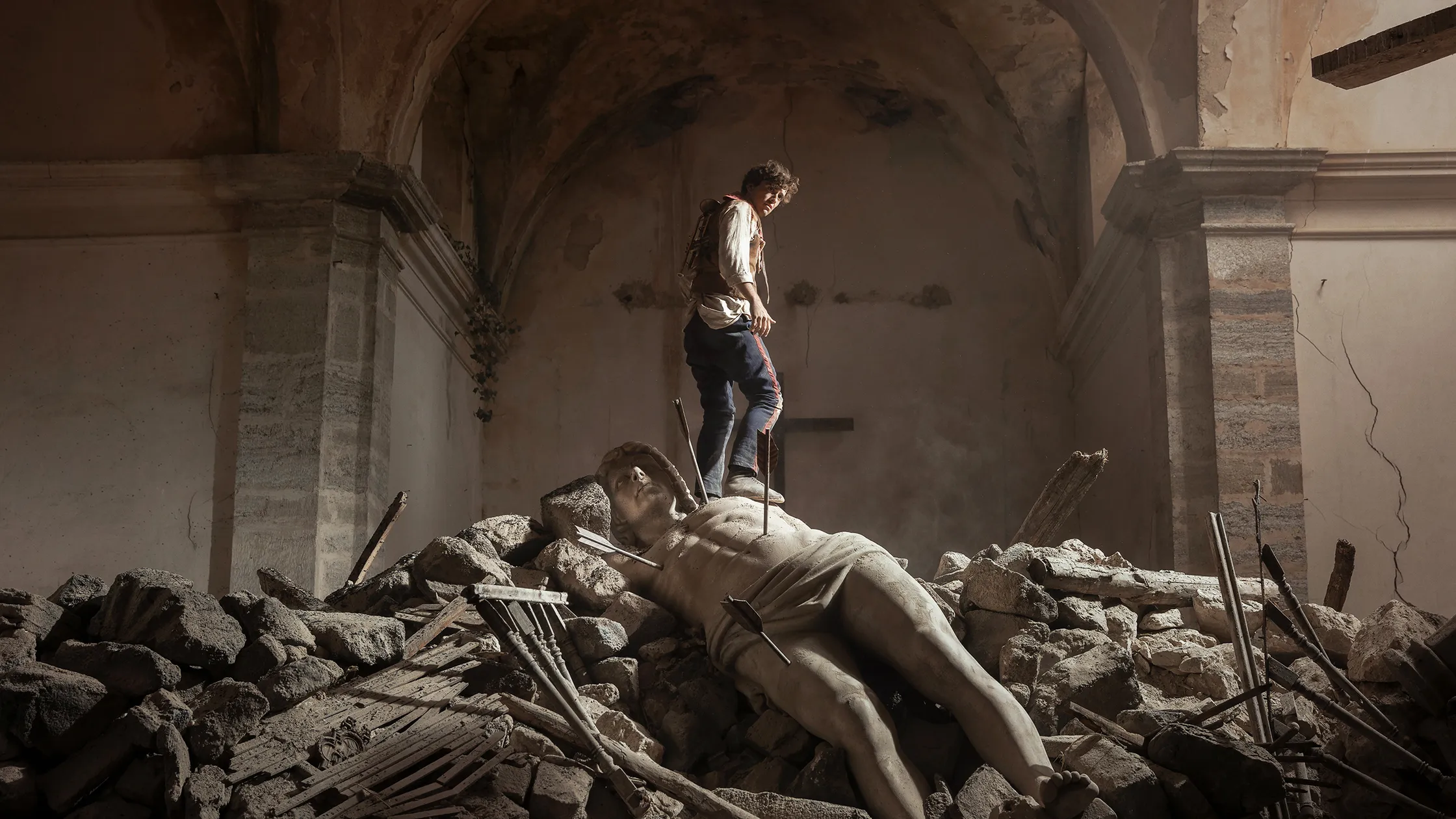
The film moves across three periods, connecting men whose lives are separated by time but joined by the risks of being seen. In one story, a young man is rejected by a prestigious club because of rumors about his sexuality. In another, a Nationalist soldier is assigned to guard a wounded Republican prisoner and falls in love with him. In the present, a queer historian follows an inheritance toward a past his family has left obscured.
That structure could feel like a puzzle assembled to make its point. Instead, the timelines make the point emotionally: history is not only what survives in documents. It is also what people conceal, what families refuse to explain, and what later generations must learn to read between the lines.
I was drawn to the film’s attention to those gaps. I have long been interested in the way a life can be reconstructed from images, objects, memories, and omissions. La bola negra understands that recovering the past is never a neutral act. The historian is not simply gathering facts. He is discovering how the past has shaped the present, and how much of himself is bound up in what was withheld.
The film’s romance matters because it gives these histories a human scale. The love between Sebastián and Rafael exists in a brutal world that offers them little room for a future. The film does not pretend that love cancels the violence around them. It lets tenderness exist inside that violence, which makes the tenderness feel more consequential.
That emotional ambition may strike some viewers as melodramatic. I found the question more interesting than the label: has the film earned the scale of its feeling? Its answer lies in the way the personal and the historical keep pressing against each other. The romance is not separate from the story of war, repression, and memory. It shows what those forces threaten to erase.
The film’s most affecting idea is that recovering a hidden life can change the meaning of the present. The past does not become less painful once it is known. But it becomes less solitary. Someone can finally recognize the shape of what happened, and another person can inherit more than silence.
La bola negra is an expansive film about queer history, but its deepest subject is the work of recognition: seeing the people who were left out, and understanding that their stories belong to us.
Leave a Reply